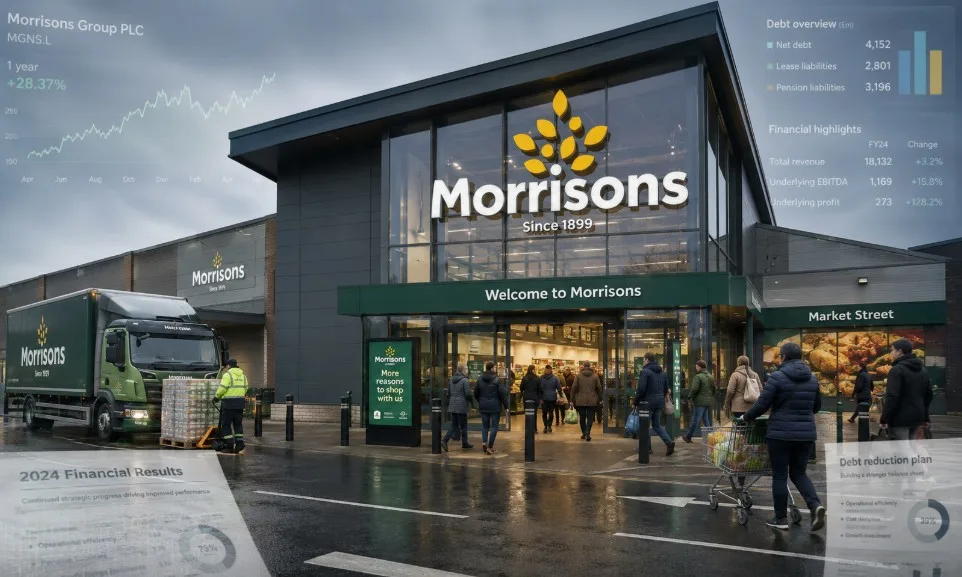

Morrisons debt management is increasingly centred on reducing financial pressure while creating new revenue opportunities through existing assets, tighter cost controls and operational restructuring.
Rather than relying on a single solution, the supermarket is combining manufacturing expansion, efficiency measures and commercial partnerships to strengthen cash flow and improve long-term resilience.
Key takeaways:
- Morrisons continues managing a net debt position of approximately £3.1bn
- Myton manufacturing has emerged as a major growth and recovery lever
- Supply discussions with rival retailers signal a shift in strategy
- Cost reductions remain part of broader financial restructuring
- Long-term recovery depends on balancing growth, debt and competitiveness
What Has Caused Morrisons’ Current Debt Position?
Morrisons’ current financial position cannot be viewed in isolation. Much of the pressure traces back to the supermarket’s 2021 acquisition by private equity firm Clayton, Dubilier & Rice (CD&R) in a deal valued at approximately £10bn.
Following the takeover, Morrisons inherited significant borrowings. While debt reduction efforts have been visible over time, interest obligations continue to place pressure on profitability.
The business reported a statutory pre-tax loss of approximately £381m, while annual borrowing costs reportedly reached £281m during the latest reporting period. Although revenues increased and like-for-like sales improved, servicing debt remains a major operational challenge.
At the same time, the wider UK grocery environment has become increasingly competitive. Traditional supermarket groups continue facing pressure from discount operators, changing consumer spending behaviour and rising operational costs.
Morrisons Financial Snapshot:
| Metric | Reported Position |
| Net Debt | Approx. £3.1bn–£3.17bn |
| Original Debt Post Takeover | Approx. £6.6bn |
| Pre-tax Loss | Approx. £381m |
| Annual Interest Cost | Approx. £281m |
| Revenue | Approx. £15.8bn |
| Sales Growth | 3.2% |
| Like-for-like Growth | 2.8% |
These figures illustrate why Morrisons debt management has become central to the company’s strategic direction.
“The trading environment remains highly competitive, and we continue to focus on mitigating impacts for customers while strengthening the business.” – Rami Baitiéh, Chief Executive of Morrisons
How Is Morrisons Debt Management Strategy Responding To Financial Pressure?
Managing debt at this scale requires more than reducing expenditure. Morrisons appears to be pursuing a layered recovery approach focused on generating additional cash flow while protecting core operations. The strategy shows several interconnected priorities.
Key recovery actions:
- Expanding commercial opportunities outside traditional supermarket sales
- Improving operational efficiency across the estate
- Reducing underperforming activities
- Strengthening manufacturing utilisation
- Maintaining sales momentum despite market pressure
Unlike businesses that rely solely on refinancing, Morrisons appears to be pursuing debt management through operational improvement and asset optimisation.
Another important factor is that reported debt has reduced from earlier post-acquisition levels, suggesting the business is not merely absorbing losses but attempting structural adjustment.
The success of this model will depend on whether new revenue streams become recurring rather than temporary.
Why Is Myton Becoming Central To Morrisons’ Recovery Plans?
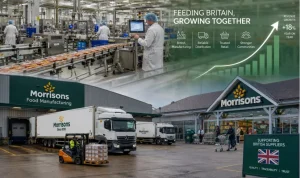
One of the most significant developments in Morrisons debt management strategy is the increased focus on Myton.
Myton operates across 17 manufacturing sites in the UK and supports the production and sourcing of food categories including pies, meat, fish, eggs and flowers.
Historically, manufacturing was treated primarily as an internal competitive advantage. The recent shift suggests Morrisons increasingly sees Myton as a broader commercial platform.
The move reflects a wider retail trend: maximise underused infrastructure before investing in entirely new growth channels. Instead of allowing spare capacity to remain underutilised, Morrisons appears to be converting operational capability into external revenue.
Why Myton Matters To Recovery?
| Myton Capability | Recovery Benefit |
| Existing UK manufacturing footprint | Avoids large capital expansion |
| Supply chain control | Supports efficiency |
| Third-party supply potential | Additional revenue |
| Existing external customers | Faster scaling opportunities |
| Production capacity | Improved asset utilisation |
This shift may reduce dependency on supermarket shelf performance alone.
Can Supplying Rival Supermarkets Help Reduce Morrisons’ Debt?
The possibility of Morrisons supplying rival supermarkets represents one of the most unusual developments in UK grocery strategy. Reports suggest discussions have included supplying products such as pies, meat and eggs through Myton to external retail and hospitality customers.
Expanding Revenue Beyond Morrisons Stores
Selling through competitors may initially appear counterintuitive, but the economics can be compelling. Manufacturing businesses often benefit from higher production volumes because fixed operational costs are spread across more output.
If Myton already has spare capacity, additional contracts could improve returns without major new investment.
This approach may help generate:
- Improved cash flow
- Better factory utilisation
- Revenue diversification
- Reduced dependence on store performance
Risks And Opportunities of Competing Through Supply Partnerships
The strategy also creates questions. Potential opportunities include broader market reach and stronger operational leverage.
Potential risks include:
- Brand dilution
- Competitor dependency
- Margin pressure
- Operational complexity
Potential Outcomes Of Supply Partnerships:
| Opportunity | Risk |
| New revenue streams | Competitor strengthening |
| Better asset efficiency | Lower pricing power |
| Improved cash generation | Brand overlap |
| Wider market presence | Increased complexity |
Even with these concerns, using existing capabilities to support debt reduction remains a practical recovery mechanism.
“Myton is a high-quality food manufacturing business and has always served other customers as well as Morrisons.” – Morrisons spokesperson
The long-term value will depend on contract quality rather than contract quantity.
What Cost-Cutting Measures Are Supporting Morrisons Debt Management?
Revenue generation alone is rarely enough to improve financial resilience. Cost control remains another major element. Recent actions reported across the business include restructuring initiatives and reducing exposure to lower-performing activities.
Areas receiving attention include:
- Convenience operations
- Store formats
- Head office structures
- In-store services
- Selected manufacturing activities
Reports have referenced:
- Closure of approximately 100 convenience locations
- Head office role reductions
- Café and counter rationalisation
- Closure of loss-making bakery operations
While these measures may improve cost efficiency, they also carry reputational and operational considerations.
Effective debt management requires balancing financial improvement with customer experience and employee impact. This is why execution becomes as important as the strategy itself.
What’s the Morrisons’ Financial Challenges And Competitive Market Reality?
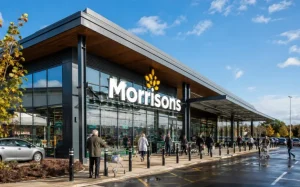
Debt management does not happen in a vacuum. Market competition remains one of the strongest influences on Morrisons’ future performance.
Competition From Aldi and Lidl
The UK grocery market continues to evolve rapidly. Discounters have expanded market share and intensified pricing pressure.
Morrisons has faced increased competition after no longer holding its previous position among the traditional Big Four supermarket leaders. Customers remain highly price-sensitive, making growth more difficult.
Maintaining Growth While Managing Debt
Despite financial pressure, Morrisons has continued generating revenue growth. Positive sales performance suggests the operating business may remain healthier than headline losses alone imply. Maintaining that momentum while servicing debt will be critical.
The Balance Between Efficiency and Customer Experience
Aggressive cost reduction can improve margins but weaken customer loyalty if not managed carefully. The challenge is ensuring operational efficiency strengthens rather than damages brand value.
“Food manufacturing is part of the DNA of Morrisons — it’s going to stay.” – Rami Baitiéh on manufacturing strategy
This position signals that internal production remains central to recovery plans.
Is Morrisons Building Long-Term Financial Recovery Or Short-Term Relief?

Morrisons’ current strategy raises questions about whether its financial improvements represent sustainable recovery or temporary relief.
There are positive indicators supporting longer-term stability, including revenue growth, reduced debt levels and increasing interest in its manufacturing operations.
At the same time, challenges such as high debt servicing costs and strong competition within the UK retail sector continue to create pressure.
Long-term success will likely depend on expanding manufacturing income, maintaining retail competitiveness and continuing disciplined financial management.
Sustainable transformation generally requires consistent operational improvement rather than relying only on short-term cost-saving measures.
What Could he Future Hold for Morrisons Debt Management and Recovery?
The future of Morrisons debt management will likely depend on how effectively the company executes its recovery strategies over the coming years. Expanding supply agreements and improving operational efficiency could strengthen profitability while supporting long-term financial stability.
The business may continue focusing on manufacturing partnerships, operational streamlining, selective growth initiatives and gradual debt reduction. At the same time, Morrisons appears to be evolving beyond a traditional retailer model towards a broader structure combining retail, manufacturing and supply operations.
Long-term success will depend on balancing financial recovery efforts with customer experience, competitive pricing and sustainable business growth within the UK retail market.
Conclusion
Morrisons debt management reflects a broader shift in how large retailers respond to financial pressure. Rather than relying on a single turnaround lever, the company is combining manufacturing expansion, selective cost control and operational restructuring to strengthen resilience.
The decision to increase Myton’s commercial role stands out as one of the most strategic elements of the recovery plan. Combined with measured debt reduction and continued sales growth, the approach creates opportunities that extend beyond traditional supermarket operations.
For UK businesses, the wider lesson is clear: recovery becomes stronger when existing strengths are converted into sustainable value.
Frequently Asked Questions
How does private equity ownership influence supermarket debt levels?
Private equity transactions often involve borrowing structures that can increase debt obligations after acquisition.
What makes food manufacturing valuable during financial restructuring?
Manufacturing can create diversified income streams and improve asset utilisation.
Can supplying competitors strengthen a retailer’s financial position?
Yes, if agreements improve volume, cash flow and production efficiency.
Why are convenience store closures used as a recovery strategy?
Closures may reduce ongoing losses and redirect resources into stronger operations.
How do interest costs affect retail profitability?
Large interest payments can reduce profits even when revenue grows.
What indicators show whether a business turnaround is working?
Revenue growth, debt reduction, operational efficiency and cash generation are common indicators.
Could supermarket diversification become a long-term growth model?
Many retailers increasingly pursue diversified revenue models to improve resilience.