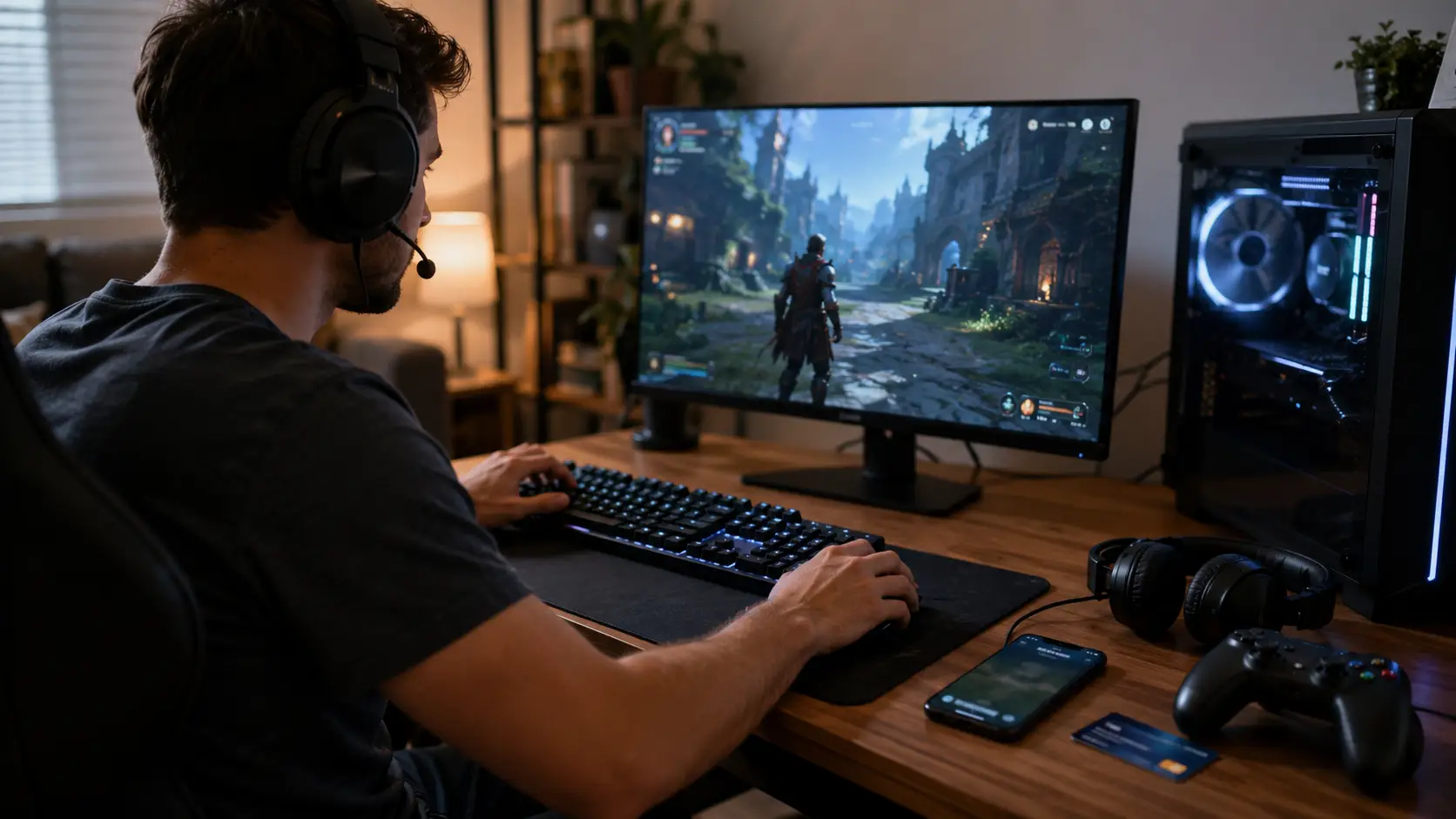

Picture a small studio in Brighton, three founders crowded around a single monitor, watching the numbers tick over after launch week. The app is doing fine on paper, downloads steady, reviews kind.
Yet the spreadsheet tells a quieter, harsher story: people arrive, poke around, and drift away. Sound familiar? It is the same wall most UK startups hit eventually. Winning attention is one thing.
Turning that attention into income that arrives month after month is another sport entirely. And few corners of the digital economy have cracked that puzzle as thoroughly as online gaming and casino entertainment, a sector built almost from the ground up on the art of keeping people coming back.
For founders studying how this works in the wild, the offshore corner of the market offers a particularly clear view. Operators known as non gamstop casinos serve UK players on sites licensed outside the domestic system, and ranked comparison guides lay their business mechanics bare in 2026.
These reviews weigh welcome bonuses against one another, scrutinise payment options from credit cards to crypto, examine licensing arrangements, and rate player safety across competing brands.
For a UK entrepreneur, the value is not in the gameplay but in the transparency: here is an entire competitive field where customer acquisition, retention and lifetime value are visible, measurable, and fiercely fought over.
Studying how these operators turn a first-time visitor into a steady returning customer is a masterclass in recurring revenue that translates well beyond entertainment.
The Freemium Blueprint Everyone Borrowed

The foundations of recurring revenue in digital gaming were poured years ago, and they have since seeped into nearly every corner of the software world. The model that changed everything was freemium: give the core experience away, then earn from a minority who pay for extras. It began as a clever survival tactic.
When Chinese developers turned to freemium to beat piracy as the only way to make money in a market where boxed copies were endlessly duplicated, they stumbled onto something far bigger than an anti-copying trick. They had reinvented how a game earns its keep.
The genius lay in the maths. A traditional title sold once and was done. A freemium game opened a door that never closed, inviting small, repeated spending over months or years. UK founders running SaaS tools, subscription boxes or membership apps are essentially working from the same template, whether they realise it or not.
The free tier is the shop window; the paid upgrade is the recurring revenue. The trick the gaming sector mastered first was making that upgrade feel like a natural next step rather than a toll booth.
Why Small, Frequent Spending Beats the Big One-Off?
There is a reason the financial press took notice when this approach matured. As one analysis put it, freemium reaps a premium for developers, spelling out how a handful of generous spenders could outweigh thousands of casual users who never paid a penny. That insight reshaped how entire businesses think about pricing.
Casino entertainment leaned into this hard. Welcome offers function as a low-friction first taste, the equivalent of a free trial that gets someone over the threshold. From there, the business carefully designs reasons to return.
VIP tiers and high-roller treatment exist precisely because a small slice of customers will, over time, account for a disproportionate share of revenue. For a UK entrepreneur, the lesson is uncomfortable but useful: chasing a flood of one-time buyers is often less profitable than nurturing a smaller core who keep spending.
A coffee subscription that bills monthly beats a single bag sold at a market stall. The maths of the loyal customer is the maths the gaming sector wrote down first.
Loyalty Is Engineered, Not Hoped For

It is tempting to assume devoted customers simply happen, the lucky by-product of a good product. The data says otherwise. Academic work on keys to gamer loyalty found that the players who stick around are not necessarily those having the most fun in the moment, but those who feel a sense of progression, recognition and belonging.
The game gives them a reason to invest emotionally, not just financially.
Casino entertainment applies this with quiet precision. Tiered membership ladders, personalised offers, status badges for regulars, even the simple satisfaction of a streak being recognised — each is a deliberate mechanism to make leaving feel like a loss.
UK founders can lift these ideas wholesale. A fitness app that celebrates a hundredth workout, a SaaS dashboard that congratulates a milestone, a loyalty scheme that escalates as a customer spends more: all are descendants of techniques refined in gaming. The principle is that engagement deepens when a customer can see how far they have come and sense there is further to go.
What Founders Should Actually Take Away?
None of this requires building a game. The transferable lessons are structural. First, design for the second visit before obsessing over the first — a customer who returns once is far likelier to return again.
Second, make pricing a staircase rather than a wall, letting people climb at their own pace. Third, treat data on payment behaviour and crypto adoption as a window into how modern customers actually want to transact, because the entertainment sector tends to read those shifts early.
The Brighton studio watching its numbers slide was not short of talent. It was short of a returning audience. The online gaming and casino world solved that problem long ago, not through magic but through patient, measurable engineering of habit and value.
Any UK entrepreneur willing to study the mechanics rather than the surface will find a recurring revenue playbook hiding in plain sight — one tested across millions of customers and ready to be adapted.