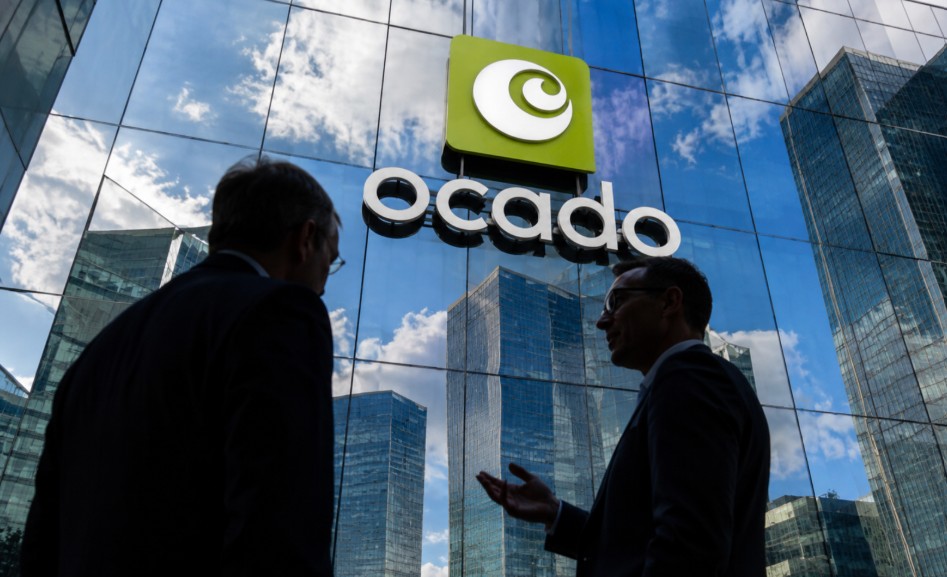

The Ocado Adam Warby shareholder dispute involves reported efforts by a group of investors to remove chairman Adam Warby over concerns about leadership succession planning. Investors representing roughly one-quarter of Ocado’s shares are said to support the move, focusing on governance and long-term strategy rather than day-to-day operations.
Key takeaways:
- Shareholders are reportedly pushing for Adam Warby’s removal as chairman.
- The dispute centres on succession planning for CEO Tim Steiner.
- Governance and long-term strategy are the primary concerns.
- No official leadership changes have been confirmed.
At the time of writing, Adam Warby remains chairman and Tim Steiner continues as chief executive, with no confirmed departures.
Last Checked: 4 July 2026
Why Are Ocado Shareholders Calling for Adam Warby’s Removal?

The current dispute centres on corporate governance rather than a single commercial issue, reflecting broader investor concerns about leadership transparency and succession planning.
Shareholders are increasingly focused on how effectively boards communicate and manage long-term leadership transitions, especially in founder-led companies like Ocado.
Key Governance Concerns:
- Investors expect clear succession planning and transparent communication
- Concerns have arisen over how the board has handled leadership transition discussions
- Shareholder confidence is influenced by governance practices, not just financial results
- Founder-led structures require careful balance between continuity and change
- Expanding global partnerships increase the need for stable leadership
Overall, the situation highlights the growing importance of governance in shaping investor trust and long-term business stability.
How Did Tim Steiner’s Future Become Central to the Ocado Dispute?
Tim Steiner’s future became one of the key issues in the Ocado shareholder dispute because of his unique position within the company.
As both a co-founder and long-serving chief executive, any discussion about his eventual successor carries significant strategic importance.
The debate has focused less on whether leadership will change and more on how and when the succession process should be managed.
Tim Steiner’s Long-standing Role at Ocado
Tim Steiner is far more than a conventional chief executive. As one of Ocado’s founders, he has played a central role in transforming the company from an online grocery retailer into an international provider of warehouse automation technology and fulfilment systems.
His leadership has helped establish partnerships with major retailers across several international markets while shaping Ocado’s long-term strategic direction. Because of this history, succession planning naturally attracts considerable attention from investors.
Replacing a founder-chief executive involves far more than appointing a new executive. It often represents a significant strategic transition that may affect corporate culture, investor confidence and long-term business priorities.
Why Some Investors Continue Supporting Steiner?
Although succession planning has become a major discussion point, many investors do not support an immediate leadership change. They believe Tim Steiner remains important to Ocado’s long-term strategy because of his experience and leadership.
Supporters highlight several reasons:
- Founder expertise: Deep understanding of Ocado’s business and strategy.
- Technology leadership: Strong track record in growing Ocado’s automation platform.
- Global partnerships: Long-standing relationships with international retail partners.
- Business stability: Leadership continuity during a period of strategic transformation.
Many shareholders believe succession planning is necessary but should not automatically result in an immediate change of chief executive.
Succession Planning Versus Immediate Leadership Change
Succession planning and leadership removal are often confused, but they represent two very different corporate governance processes.
Public companies regularly prepare leadership transition plans well before any executive departure to ensure business continuity and minimise future disruption.
The following table highlights the key differences:
| Aspect | Succession Planning | Immediate Leadership Change |
| Primary purpose | Prepare for future executive transition | Replace current leadership without long-term preparation |
| Timing | Planned months or years in advance | Usually occurs following a board decision or unexpected event |
| Impact on strategy | Helps maintain continuity | May lead to significant strategic changes |
| Investor perception | Generally viewed as good governance | Can create uncertainty depending on the circumstances |
| Effect on management | Allows gradual transition | Often requires rapid organisational adjustment |
In the current Ocado dispute, the discussion appears to centre on how succession planning has been handled rather than whether Tim Steiner should immediately step down.
What Role Has Adam Warby Played Since Becoming Ocado Chair?
Since becoming Ocado’s chairman, Adam Warby has been responsible for leading the board, promoting strong corporate governance, and overseeing executive management rather than managing the company’s day-to-day operations.
He also plays an important role in maintaining effective communication between directors and shareholders, particularly during significant governance matters such as executive succession planning.
Ocado’s official board information confirms that Warby was appointed as Non-Executive Director on 1 November 2024 and became Non-Executive Chair on 1 December 2024, according to its board and leadership page.
Recent reports suggest some investors believe Warby’s approach to succession planning has contributed to growing boardroom tensions, leading to calls for his removal.
However, Ocado has not announced any official change to his position, and shareholder opinions remain divided over the board’s handling of leadership planning.
Which Shareholders and Board Figures Are Linked to the Dispute?
The Ocado dispute involves differing views among major shareholders rather than a single investor position. While some investors have expressed concerns about the board’s approach to leadership succession, others continue supporting the current leadership or favour a gradual transition.
Key figures linked to the dispute include:
- Adam Warby: Ocado chairman facing shareholder calls for removal.
- Tim Steiner: Co-founder and CEO, whose succession planning has become central to the debate.
- Jörn Rausing: A prominent shareholder whose reported involvement has brought increased attention to the governance dispute.
Despite the reported disagreements, any significant board changes would typically follow Ocado’s formal corporate governance and shareholder approval processes rather than happen immediately
What Are the Confirmed Facts Behind the Ocado Boardroom Row?
Separating confirmed information from market speculation is essential when assessing any corporate governance dispute.
At the time of writing, several key facts have been publicly reported or confirmed through company communications and reputable financial media.
- First, Adam Warby remains chairman of Ocado Group. Although reports describe growing shareholder pressure for his removal, no official announcement has confirmed that he has stepped down or been removed.
- Second, Tim Steiner continues as Ocado’s chief executive. While succession planning has reportedly become the focus of discussions between the board and some shareholders, there is no confirmation that he plans to leave immediately.
- Third, the dispute centres on governance and leadership succession rather than allegations of financial misconduct or operational failure.
- Finally, the reported shareholder campaign reflects increasing investor focus on governance, transparency, and board accountability.
Overall, the situation is best understood as a boardroom governance dispute rather than a leadership crisis.
Why Does the Ocado Adam Warby Shareholder Dispute Matter to Investors?
Corporate governance plays a significant role in determining how investors evaluate long-term business resilience.
Although quarterly financial results remain important, many institutional investors also assess whether a company’s board demonstrates effective oversight, succession planning and independent decision-making.
When disagreements become public, they can influence market confidence even before any leadership changes occur. In this case, investors representing about one-quarter of Ocado’s shares are reportedly backing calls to remove Warby amid tension over Tim Steiner’s succession, according to recent industry coverage.
Corporate Governance and Board Confidence
The board’s primary responsibility is to protect shareholders’ long-term interests.
If investors believe governance processes are becoming less effective or communication between directors and shareholders has weakened, confidence can be affected regardless of current trading performance.
For founder-led businesses such as Ocado, governance decisions are often especially sensitive because founders typically remain closely associated with corporate strategy and investor expectations.
Market Confidence and Valuation
Boardroom uncertainty can also influence market sentiment. While governance disputes do not automatically lead to changes in company valuation, investors generally prefer certainty regarding future leadership, strategic priorities and board stability.
Periods of prolonged uncertainty may encourage investors to adopt a more cautious approach until greater clarity emerges.
Strategic Execution
Ocado has evolved beyond online grocery retailing into a global technology business that develops automated fulfilment solutions for supermarket operators.
Large technology partnerships often require long-term planning, stable executive relationships and confidence in strategic continuity. For this reason, governance stability can become an important consideration alongside financial performance.
How Does Ocado’s Wider Business Performance Add Pressure to the Row?

The governance dispute comes as Ocado continues investing heavily in warehouse automation technology while expanding partnerships with international retailers. At the same time, the company has faced ongoing investor questions about profitability, returns on investment, and the pace of long-term growth.
As shareholder expectations shift from rapid expansion to sustainable earnings and stronger capital allocation, board decisions and governance standards have come under greater scrutiny.
Because Ocado’s strategy relies heavily on its global technology partnerships, leadership stability remains important for maintaining confidence among investors and commercial partners.
As a result, concerns over succession planning have become closely linked with wider discussions about Ocado’s long-term strategy and board leadership.
What Misinformation Should Readers Avoid About the Ocado Dispute?
As the Ocado governance dispute has attracted widespread attention, it is important to separate confirmed facts from speculation. Several assumptions circulating online are not supported by official announcements.
Common misconceptions include:
- Adam Warby has already been removed as chairman: There is no official confirmation that he has stepped down or been removed.
- Tim Steiner is leaving Ocado immediately: Discussions about succession planning do not mean his departure has been announced.
- Succession planning signals a leadership crisis: Preparing for future leadership transitions is a standard corporate governance practice.
- Shareholder pressure guarantees board changes: Any significant leadership or board changes must follow Ocado’s formal governance and shareholder approval processes.
By relying on confirmed company updates and reputable financial reporting, readers can better understand the dispute without confusing speculation with established facts.
What Could Happen Next in the Ocado Chair Removal Dispute?

Several possible outcomes remain open. One possibility is that the current board remains unchanged while governance discussions continue privately with major investors.
Another scenario is that shareholders seek stronger engagement with the board regarding succession planning before considering more formal governance action.
The board may also provide additional public communication outlining its approach to executive succession, helping reduce uncertainty among investors.
Alternatively, governance discussions could eventually lead to board changes if shareholders conclude different leadership arrangements better support the company’s long-term strategy. At present, however, none of these outcomes has been officially confirmed.
Timeline of the Ocado Adam Warby Shareholder Dispute
| Period | Key development |
| December 2024 | Adam Warby becomes Chairman of Ocado Group. |
| 2025–2026 | Succession planning discussions reportedly continue. |
| Mid-2026 | Reports emerge of growing shareholder dissatisfaction. |
| July 2026 | Investors reportedly support calls for Warby’s removal while Tim Steiner remains CEO. |
| Current position | No official confirmation of leadership changes has been announced. |
Conclusion
The Ocado Adam Warby shareholder dispute illustrates how leadership succession can become one of the most closely scrutinised aspects of corporate governance.
Although public attention has focused on reported calls for Adam Warby’s removal, the underlying issue extends beyond one individual. It reflects broader questions about how founder-led companies balance leadership continuity, board independence and shareholder expectations as they mature.
For investors, the key issue is not simply whether board changes occur, but whether Ocado demonstrates transparent governance, effective communication and a credible long-term leadership strategy.
Until formal company announcements provide greater certainty, the dispute should be viewed as an evolving governance story rather than a concluded leadership change.
Frequently Asked Questions
Why is corporate governance so important for listed companies?
Corporate governance helps ensure directors act in shareholders’ long-term interests through accountability, transparency, effective oversight and responsible decision-making.
What is shareholder activism?
Shareholder activism occurs when investors seek to influence company decisions, governance practices or strategic direction through engagement, voting or public campaigns.
Does a chairman manage a company’s daily operations?
No. The chairman leads the board and oversees governance, while the chief executive manages day-to-day operations and business strategy.
Why do founder-led companies often face succession challenges?
Founders frequently have deep knowledge, investor trust and strategic influence, making leadership transitions more complex than in businesses with non-founder executives.
Can institutional investors influence board decisions?
Yes. Large shareholders can influence governance through engagement, voting rights and collaboration with other investors, although formal corporate procedures still apply.
Could governance disputes affect business performance?
Governance disputes can influence investor confidence and market sentiment, although operational performance depends on many commercial and strategic factors.
Where can readers find official updates on Ocado?
The most reliable information comes from Ocado Group’s regulatory announcements, annual reports and investor relations communications, alongside announcements published through the London Stock Exchange’s disclosure system.
Editorial Note:
This article is based on publicly reported information available at the time of writing. The developments discussed relate to an ongoing corporate governance dispute at Ocado Group.
As events continue to evolve, readers should refer to future company announcements and regulatory disclosures for the latest confirmed information. This article is intended for informational purposes and does not constitute investment or financial advice.