

Starting a new job comes with paperwork, onboarding forms, payroll setup and one common question: what bank details do employers need?
In the UK, employers generally only require a small set of banking information to pay your salary correctly and on time. However, many employees are unsure about what is necessary to share and what should remain private.
Providing accurate details helps payroll process wages efficiently, supports HMRC reporting, and reduces the risk of payment delays or tax complications.
Key takeaways:
- The bank details employers need to pay your salary
- Information you should never share
- Additional payroll and HMRC requirements
- What to do if salary payments go wrong
- How to avoid delays during onboarding
What Bank Details Do Employers Need to Pay Your Salary?
For most UK employees, employers only need a few banking details to transfer wages through payroll systems. These details allow salary payments to move securely into the correct account without requiring access to your personal banking services.
The standard details requested include your account holder name, account number and sort code. Some employers may also ask for supporting banking information depending on payroll software or payment arrangements.
Bank details commonly requested:
| Detail | Purpose | Usually Required |
| Account Holder Name | Identifies who receives payment | Yes |
| Account Number | Directs salary to correct account | Yes |
| Sort Code | Identifies the bank branch | Yes |
| Bank Name | Supports payroll administration | Sometimes |
| Branch Address | Used in certain systems | Occasionally |
| Building Society Roll Number | Required for some building society accounts | If applicable |
In most situations, supplying accurate payment details once during onboarding is enough to begin receiving salary.
“Accurate employee payment information reduces payroll errors and improves first-time payment success across onboarding cycles.” — UK Payroll Operations Manager
Employers do not need access to your funds. Their role is limited to initiating salary payments.
Why Do Employers Ask for Your Bank Details?

Employers collect bank details because salary payments are usually made electronically through payroll systems using BACS or equivalent transfer methods.
During payroll processing, employers calculate earnings, tax deductions, National Insurance contributions, pension deductions and other statutory adjustments. Your banking information is then attached to that payroll record so the net salary reaches the correct account.
Payroll teams also use this information to:
- Issue electronic payslips
- Schedule regular pay cycles
- Process expense reimbursements
- Support workplace pension administration
- Meet HMRC reporting obligations
Employers must maintain payroll records accurately and securely. HMRC guidance emphasises the importance of correct employee information to help assign tax codes and match Pay As You Earn (PAYE) records.
Incorrect employee data can create additional administration and affect take-home pay.
Which Bank Details Should You Give to Payroll?
When completing payroll forms, accuracy matters more than speed. Even a minor error can delay salary payments, create additional payroll administration, or require corrections before wages reach your account.
In the UK, employers generally only request details necessary to transfer money securely through their payroll system.
Providing complete and accurate information at the beginning of your employment helps avoid issues during your first pay cycle and reduces the likelihood of payment delays later.
Account Holder Name
Your account holder name is simply the name registered with your bank account.
For personal accounts, this is usually your legal name. Payroll departments often recommend using the same format shown on official records to avoid processing issues.
Examples include:
- Full legal first and surname
- Correct spelling
- Matching employment records where possible
If your bank account includes multiple names, such as a joint account, confirm which name should appear for salary payments. It is also worth checking whether your employer requires the name exactly as it appears in banking records.
Sort Code and Account Number
The sort code identifies the bank branch, while the account number identifies your specific account. Most UK account numbers contain eight digits, and sort codes appear in six-digit format. Together, these details direct salary payments to the correct destination.
Ways to locate these details:
- Mobile banking apps
- Online banking
- Printed bank statements
- Debit card information in some cases
Before submitting details to payroll, double-check every digit carefully.
Bank Name, Branch Address and Roll Number
Some payroll systems may request additional banking information beyond your sort code and account number.
If you hold a building society account, you may also need a roll number to route payments correctly. While this requirement is less common than in the past, some institutions still rely on it.
Additional information may include:
| Additional Detail | When It May Be Needed |
| Bank Name | Internal payroll records |
| Branch Address | Legacy payment systems |
| Roll Number | Building society payments |
Although not always mandatory, providing requested information promptly helps reduce processing delays. These additional details are usually requested to support internal payroll processing rather than to complete the payment itself.
Do Employers Need IBAN or SWIFT/BIC Details?
For employees paid into a standard UK bank account, employers usually do not need IBAN or SWIFT/BIC details. These codes are mainly used for international payments, especially when wages are sent to an overseas account or processed through foreign currency payroll.
An IBAN helps identify the employee’s bank account internationally, while a SWIFT/BIC code identifies the receiving bank.
Employers may request these details for remote international workers, overseas relocations, cross-border salary transfers or non-UK payroll arrangements.
International payments can also involve extra checks and longer processing times. If you are unsure, contact your payroll team before submitting these details.
What Bank Details Should You Never Share with an Employer?
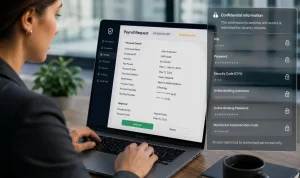
Knowing what employers should not request is equally important as understanding what they do need. Legitimate employers only need information required to send money into your account. They do not require access to your account.
Never share:
- PIN numbers
- Online banking passwords
- Debit card CVV/security codes
- Full banking login credentials
- Security verification codes
If an employer or recruiter requests this type of information, pause and verify the request through official company channels.
Safe vs Unsafe Information to Share:
| Safe to Share | Never Share |
| Account holder name | PIN |
| Sort code | Banking password |
| Account number | Security code |
| Bank name | Online login |
| Roll number (if required) | Debit card credentials |
“Employers only require payment destination information. They should never request credentials that allow account access.” — Chartered Payroll Consultant
Protecting your financial information is part of safe onboarding.
What Other Information Does an Employer Need Alongside Your Bank Details?
Bank details alone are not enough to complete payroll setup. Employers also collect employment and HMRC-related information to ensure wages, tax deductions and statutory obligations are processed correctly. These records support employee identification and help reduce payroll discrepancies.
Personal Identification Details
Your identity information helps HMRC match payroll records correctly. When employers submit payroll data, HMRC uses employee details to connect earnings and tax information to the correct National Insurance record. Even small inconsistencies may delay processing or lead to temporary tax code issues.
Employers commonly request:
- Full legal name
- Title
- Date of birth
- Home address
- National Insurance number
- Contact email
HMRC advises employers to enter personal details exactly as shown on official documents.
Payroll and Tax Documents
Tax documentation supports accurate deductions from your first pay period. Employers use tax documents to determine how income tax should be calculated and whether previous employment earnings need to be considered during payroll setup
Employers may request:
- P45
- Starter checklist
- Starter declaration
- Tax code information
If a P45 is unavailable, the digital starter checklist can often be used. Accurate submissions reduce tax corrections later.
Employment and Payment Information
Additional employment information helps payroll calculate earnings. This information enables employers to determine salary amounts, pension contributions and payment schedules correctly from the beginning of employment.
Common requirements include:
- Employment start date
- Salary details
- Hourly rates
- Standard working hours
- Pension enrolment information
“The quality of onboarding data directly influences payroll accuracy and employee satisfaction.” — Senior HR and Compliance Adviser
Submitting complete information early often results in smoother first payments.
When Should You Give Bank Details to a New Employer?

You should usually give your bank details to a new employer during onboarding or before the payroll deadline for your first salary payment. Employers often collect this information alongside starter forms, tax details and other employment documents.
If you wait too long, your first wage payment may be delayed or require manual processing by the payroll team. This can also create extra administration for both you and your employer.
A sensible approach is to submit your details early and confirm several days before payday that payroll has received them correctly.
If your employer uses a secure employee portal, update your information there to reduce errors and protect your banking details.
What Happens If You Provide Incorrect Bank Details?
Incorrect bank details can affect salary timing and require additional payroll corrections. Although payroll systems are designed to process payments efficiently, incorrect information may interrupt payment schedules and create administrative work for both employees and employers.
Even where payroll has already processed payment instructions, correcting errors may take additional time depending on banking procedures and employer schedules.
Delays to Salary Payments
If payment details are entered incorrectly, salary may:
- Fail to process
- Return to the employer
- Reach an incorrect destination account
- Require reprocessing
Resolution times depend on payroll schedules and banking procedures. Employees should notify payroll immediately if an error is discovered.
Payroll Corrections and HMRC Implications
Incorrect onboarding information can affect more than payment transfers. Payroll data supports tax reporting and employee record management, so inaccurate details may create wider administrative consequences.
Potential consequences include:
- Delayed payslips
- Incorrect tax codes
- HMRC record mismatches
- Pension contribution adjustments
HMRC relies on accurate personal and payroll data to match employee records. Correcting issues quickly reduces administrative complications.
What Should You Do If Your Salary Has Not Been Paid?

Missing salary payments can usually be resolved through a structured process. Start by checking whether payment was received and then review your payroll records.
Recommended actions:
- Confirm the official pay date.
- Check recent bank transactions.
- Compare payment amount with payslip.
- Verify bank details submitted.
- Contact payroll or HR.
- Follow up with your bank if required.
If a payslip exists but funds have not arrived, payroll may need to confirm the payment status.
Keep records of emails and confirmation messages in case follow-up is required. Most payment issues are resolved quickly once the source of the error is identified.
Conclusion
UK employers usually need your account holder name, account number and sort code to pay your salary. In some cases, they may also ask for your bank name, branch address, roll number or international payment details.
Alongside this, accurate personal information, National Insurance details and payroll documents help ensure correct tax treatment and timely payments.
Always check your details before submitting them, and never share your PIN, password or online banking security information.
FAQs About What Bank Details Do Employers Need?
Can you change your bank details after starting a new job?
Yes. Most employers allow updates through payroll or HR systems before the next payroll cut-off date.
Do employers need proof that the bank account belongs to you?
Usually no, although verification may occasionally be requested for security or compliance purposes.
Can your wages be paid into a joint bank account?
Often yes, provided the account can receive payments and complies with employer payroll policies.
How long does payroll take to update new bank details?
Update times vary, but changes are commonly applied during the next payroll cycle.
Is a building society roll number still required?
Some building societies still use roll numbers, so check with your provider if unsure.
Can an employer refuse to pay wages without bank details?
Employers must pay wages owed, but payment methods may depend on company payroll procedures.
Where can you find your sort code and account number?
You can find them in mobile banking apps, online banking portals, bank statements or account documents.