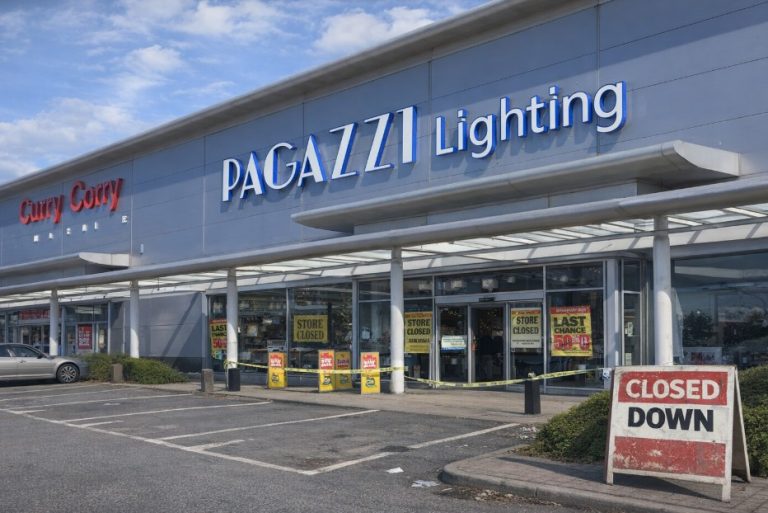

The Russell & Bromley administration sale in 2026 signals more than just discounts, it represents a major turning point for one of Britain’s most recognisable footwear brands.
With prices reduced by up to 50% and “everything must go” signs appearing across stores, shoppers are understandably asking what this really means.
At its core, the sale is a stock-clearance strategy following administration, designed to generate cash and wind down most store operations while a partial rescue deal takes shape.
Key takeaways:
- Russell & Bromley entered administration in January 2026
- Discounts increased from 20% to up to 50%
- Most stores are expected to close after stock is sold
- Three stores were saved through a deal with Next
- Shoppers face both opportunities and limitations
Why is the Russell & Bromley Administration Sale Making Headlines in 2026?
The Russell & Bromley administration sale has gained widespread attention due to a mix of heavy discounts and uncertainty around the future of a long-established British brand.
Founded in 1880, the retailer was known for premium footwear and a loyal customer base, making its financial struggles particularly notable.
In January 2026, the company entered administration after years of declining profitability, triggering clearance sales across stores. Discounts quickly rose from around 20% to as much as 50% as the situation developed.
Beyond the sale, this reflects wider challenges in UK retail, including rising costs and shifting consumer habits.
As one industry spokesperson noted:
“Administration sales like this are not just about clearing stock—they signal deeper structural issues within the high street economy.”
This is not just a sale, it is a turning point for a heritage brand and a reflection of wider pressures facing the UK high street.
What Does “Everything Must Go” Actually Mean at Russell & Bromley?

The phrase “everything must go” is widely used in retail, but in the context of the Russell Bromley administration sale, it carries a more specific meaning.
It indicates that stores are actively trying to clear inventory quickly, often ahead of closures or restructuring.
However, it does not necessarily mean every single item will be sold at the lowest possible price or that all locations will disappear immediately. Instead, it reflects a staged process where stock is gradually reduced, and discounts may deepen over time.
In practical terms, this means you may notice:
- Increasing discounts as stock levels drop
- Limited sizes and styles available
- A sense of urgency in-store as inventory declines
Understanding this helps you interpret the sale more realistically rather than assuming it guarantees the absolute best deal at all times.
Why Did Russell & Bromley Go Into Administration?
The collapse of Russell & Bromley did not happen overnight. It was the result of several long-term pressures that intensified after the pandemic.
The company, founded in 1880, had built a reputation for premium footwear. However, shifts in consumer behaviour, combined with rising costs, made it increasingly difficult to sustain profitability.
Key factors behind the administration:
- Decline in demand for premium footwear post-pandemic
- Rising costs including rent, wages, and supply chains
- Increased competition from online retailers
- Long-term unprofitability since 2019
Business pressures explained:
| Factor | Impact on Russell & Bromley |
| Reduced consumer spending | Lower sales volumes |
| Rising operational costs | Shrinking profit margins |
| Shift to online shopping | Reduced footfall in stores |
| Legacy retail model | Slower adaptation to change |
An industry analyst noted:
“Even well-established brands are vulnerable if they cannot adapt quickly enough to structural changes in retail. Heritage alone is no longer a guarantee of survival.”
This combination of challenges ultimately made administration the most viable path forward.
Is an Administration Sale the Same as a Liquidation or Closing Down Sale?

An administration sale is often confused with liquidation, but they are not the same. Understanding this difference is crucial when interpreting the Russell and Bromley administration sale.
Administration is a process aimed at rescuing or restructuring a business. Liquidation, on the other hand, means the company is shutting down completely and selling all assets permanently.
| Type of Sale | What It Means | Business Outcome |
| Administration sale | Business seeks restructuring while clearing stock | Partial survival possible |
| Liquidation sale | Business closes permanently and sells all assets | No continuation |
| Closing down sale | Stores shut but brand may or may not continue | Depends on ownership or restructuring |
In this case, the involvement of Next suggests that Russell & Bromley is not disappearing entirely but may continue in a reduced or restructured form.
How Much Can Shoppers Really Save in the Russell & Bromley Administration Sale?
One of the biggest attractions of the Russell Bromley administration sale is the level of discount available. Initially, reductions began at around 20%, but these have increased to as much as 50% as the sale has progressed.
The pricing strategy reflects a typical administration pattern, discounts deepen over time to accelerate stock clearance.
| Stage of Sale | Typical Discount |
| Early phase | Around 20% off |
| Mid phase | 30%–40% off |
| Final clearance | Up to 50% off |
Real shopper experience
During a recent visit to a London store, I came across a shopper who visited a London store and shared their experience. They said:
“I picked up a pair of leather shoes at nearly half price. The selection was smaller than usual, but the quality was still there. It definitely felt like a last chance to buy from the brand.”
This highlights a key reality, while savings can be significant, availability becomes increasingly limited.
Which Russell & Bromley Stores Are Closing and Which Ones Are Staying Open?
The store situation is central to understanding the Russell & Bromley administration sale. While a small number of locations have been preserved, the majority are expected to close after stock is cleared.
Stores saved under the Next acquisition
- Chelsea
- Mayfair
- Bluewater Shopping Centre
These locations were selected due to their strong performance and strategic value, ensuring that the brand retains a presence on the high street.
Outside of this deal, 33 stores and nine concessions continue to operate under administrators. These sites are trading temporarily and are expected to close once inventory runs out, with many reports suggesting timelines extending towards May 2026.
What Does Next’s Takeover of Part of Russell & Bromley Mean for the Brand?

The involvement of Next has added an important layer to the story. Through a pre-pack administration deal completed in January, the retailer acquired selected assets, including three stores and some employees.
This move suggests that while the current retail footprint is shrinking, the brand itself may not disappear entirely. Instead, it could be repositioned under new management with a more focused strategy.
From a business perspective, this type of acquisition allows:
- preservation of brand value
- retention of key locations
- potential for future growth under a stronger operator
For shoppers, it means Russell & Bromley may continue to exist, albeit in a reduced form.
What Should Shoppers Know Before Buying From an Administration Sale?
Shopping during the Russell & Bromley administration sale can present genuine value, but it also comes with a different set of expectations compared to a typical retail experience.
While discounts of up to 50% are appealing, you should approach purchases with a clear understanding of the limitations involved.
Administration sales are designed to clear stock quickly, which often means policies and availability are less flexible than usual.
Returns, Refunds and Exchange Limitations
Administration sales often operate under stricter terms than standard retail environments. In many cases, items may be sold as non-refundable or exchange-only, and some purchases may be final.
This is because the business is in the process of restructuring or closing locations, leaving less scope to handle returns efficiently.
You should always check the store’s specific policy before buying, especially for higher-value items.
Gift Cards, Warranties and Payment Protections
Gift card usage during an administration sale can vary depending on the stage of the process and individual store policies.
Some locations may still accept them, while others may not. Warranties may still apply to products, but it is important to confirm the terms at the point of purchase.
Choosing a secure payment method, such as a credit card, can provide additional protection, particularly if issues arise after the transaction.
Stock Availability and Pricing Strategy
During the Russell & Bromley administration sale, stock levels change rapidly as items sell out and are not restocked. Popular sizes and styles, especially premium footwear, tend to disappear quickly, making timing important when shopping.
At the same time, pricing may shift as the sale progresses. Discounts can increase to clear remaining stock, but better deals are not guaranteed on all items.
Key points to consider:
- Popular products sell out early
- Discounts may increase over time
- Availability varies by store
Overall, balancing timing is essential, waiting could mean better prices, but also fewer choices.
Does “Everything Must Go” Mean the End of Russell & Bromley on the UK High Street?
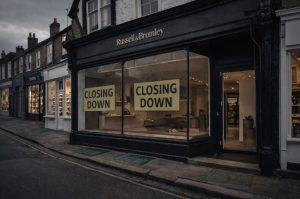
Despite the dramatic messaging, “everything must go” does not necessarily mean the complete end of the brand. Instead, it signals a transition.
Most stores are expected to close, but the survival of key locations under Next suggests that Russell & Bromley could continue in a smaller, more focused format.
For many shoppers, this sale represents the end of an era. However, from a business perspective, it may also mark the beginning of a new chapter.
What Does the Russell & Bromley Administration Sale Say About the Wider UK Retail Market?
The Russell & Bromley administration sale reflects a broader shift across the UK high street, highlighting the increasing pressure on even well-established heritage brands.
Once known for strong in-store presence and loyal customers, many traditional retailers are now struggling to adapt to rapidly changing market conditions.
Today’s retail environment is shaped by evolving consumer behaviour, the rapid growth of online shopping, and rising operational costs such as rent, energy, and staffing. These challenges have made it harder for physical stores to maintain profitability.
As a result, reputation alone is no longer enough. Businesses must embrace innovation, flexibility, and digital strategies to remain competitive in an increasingly demanding retail landscape.
Conclusion
The Russell & Bromley administration sale offers a rare opportunity to purchase premium footwear at significantly reduced prices. Discounts of up to 50% make it appealing, especially for loyal customers of the brand.
However, it is not without its limitations. Reduced return options, limited stock, and uncertainty around store closures mean that shoppers should approach the sale with awareness.
Ultimately, “everything must go” reflects both urgency and transition. It is not just a sale, it is a moment of change for a historic British retailer.
Frequently Asked Questions
Is Russell & Bromley still trading in the UK?
Yes, some stores are still trading during the administration sale, although many are expected to close once stock is sold.
Are all Russell & Bromley stores closing permanently?
No, three stores have been saved under the Next acquisition, while others are likely to close.
Can you return items bought in the administration sale?
Returns may be limited or unavailable, depending on store policies at the time of purchase.
Are gift cards still valid during the sale?
Gift card acceptance may vary, so it is advisable to check with individual stores.
Who owns Russell & Bromley now?
Parts of the business have been acquired by Next, including selected stores and staff.
Do discounts increase as the sale progresses?
In many cases, yes. Discounts may deepen as stock needs to be cleared more quickly.
What happens to employees during administration?
Some employees are retained or transferred, but many face redundancy as stores close.