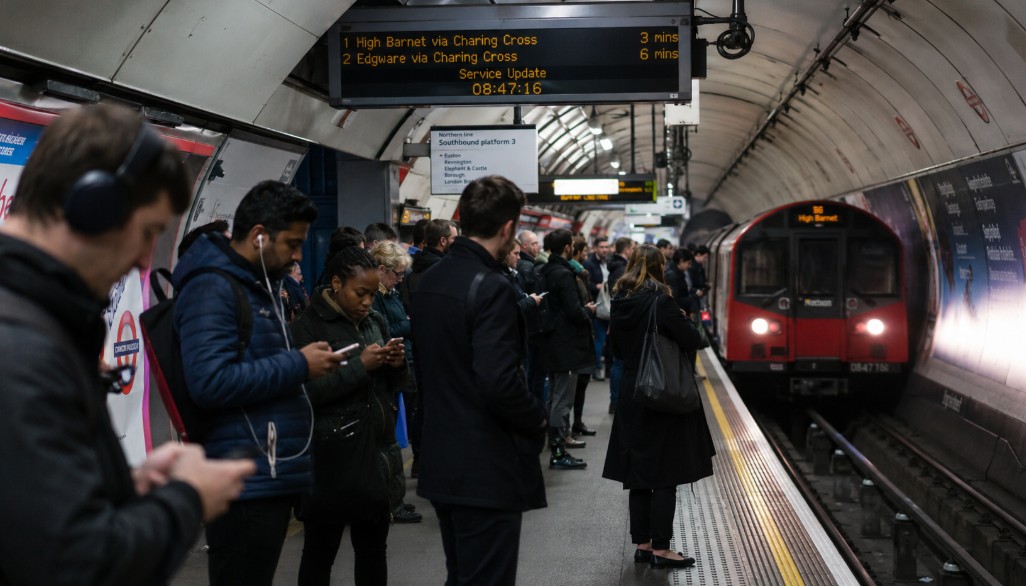

The planned London Tube strikes scheduled for this week have been suspended following last-minute discussions between the Rail, Maritime and Transport union (RMT) and London Underground.
The immediate disruption many passengers expected has been avoided, and Underground services are continuing to operate.
However, the wider dispute has not been fully resolved. The disagreement over the proposed voluntary four-day working week remains active, and the union has warned that further industrial action may still happen if progress is not made.
Key points:
- The planned Tube strikes for this week have been called off
- The dispute centres on proposed four-day compressed working arrangements
- Transport for London and unions remain in discussions
- Further strike dates have been proposed for early June if negotiations stall
- Travellers should continue checking live travel updates before journeys
Has the Tube Strike Been Cancelled in London?
Yes, the Tube strike planned to affect London this week has been cancelled. The Rail, Maritime and Transport union confirmed that the scheduled industrial action would not go ahead after talks with London Underground led to movement in discussions.
The strike had been expected to affect travel across multiple days due to the timing of the planned walkouts. The cancellation provides immediate relief for commuters who had already started making alternative plans and for businesses preparing for reduced footfall.
According to the union, discussions at the final stage opened the door to further exploration of concerns related to staff rosters, driver fatigue and safety arrangements.
“At the 11th hour the employer has shifted its position allowing us to further explore our members’ concerns around the imposition of new rosters, fatigue and safety issues.” – RMT Statement
While the cancellation removes immediate disruption, passengers should not interpret this as a final resolution.
Which Tube Strike Dates Have Been Cancelled or Rescheduled?
The planned industrial action was originally designed to take place across multiple periods and would have affected travel over several consecutive days.
Strike Schedule Update:
| Planned Action | Original Status | Current Status |
| Mid-May strike period | Planned | Suspended |
| Mid-June strike dates | Planned | Cancelled |
| Early June replacement dates | Not previously scheduled | Proposed if dispute continues |
The strikes had been expected to begin at midday and continue for 24-hour periods, creating a rolling impact across the Underground network.
Several lines had prepared for major disruption and TfL had advised passengers to expect reduced services.
For passengers who had cancelled meetings, changed bookings or organised remote working, the announcement arrived late but provided immediate relief.
Why Did RMT Suspend the Planned Tube Strike?
The planned Tube strike was suspended after late-stage talks between the RMT union and London Underground showed enough progress to continue negotiations. This helped avoid immediate travel disruption across London.
However, the dispute has not been fully resolved. RMT has made clear that further industrial action could still happen if talks fail to deliver meaningful progress.
What Changed During Last-Minute Negotiations?
According to union statements, the suspension followed movement in discussions regarding employee concerns.
RMT explained that London Underground adjusted its position sufficiently to allow further exploration of concerns linked to fatigue, safety and roster implementation.
Rather than proceeding directly into industrial action, the union chose to continue negotiations.
Employer Position and Continued Discussions
Transport for London maintained that the proposed working arrangements remain voluntary and are designed to improve employee flexibility while supporting service reliability.
TfL stressed that participation would not be mandatory and that discussions would continue before any broader implementation decisions are made.
The organisation positioned the proposal as part of a wider effort to modernise operations while maintaining service standards across the network.
“We are pleased that RMT has withdrawn its planned industrial action this week. This is good news for London.” — Nick Dent, Director of Customer Operations, London Underground
TfL stated that discussions would continue across all trade unions before implementation.
Why the Dispute Remains Open?
Although strike action has paused, underlying concerns remain unresolved. Several areas continue to divide both sides and remain central to ongoing discussions.
Key areas of disagreement include:
- Shift flexibility
- Length of working periods
- Driver fatigue considerations
- Safety implications
- Long-term roster arrangements
RMT representatives argued that compressed hours should not create additional strain or reduce operational flexibility.
Because of these unresolved concerns, negotiations remain central to what happens next.
What Is the Dispute About the Four-Day Working Week?

At the centre of the disagreement is TfL’s proposal to introduce a voluntary four-day working week for Underground drivers. The proposal does not reduce total working hours.
Instead, it condenses existing hours across fewer days. Supporters argue that this could improve work-life balance and provide drivers with significantly more time away from work each year.
Critics argue that compressed schedules may lead to fatigue and create practical concerns around shift planning.
Proposal comparison:
| Area | TfL Position | RMT Position |
| Four-day week | Voluntary | Concern over practical impact |
| Driver flexibility | Improved | Potentially reduced |
| Service reliability | Better consistency | Operational concerns |
| Safety impact | No compromise | Requires further review |
The disagreement is not necessarily about whether flexible working should exist, but about how it would operate in practice.
Some union representatives argued that what was being proposed resembled five days’ worth of work compressed into four longer shifts rather than a traditional shorter working week.
This distinction became one of the most discussed aspects of the negotiations.
How Does TfL Describe the Voluntary Four-Day Week Proposal?
Transport for London has consistently described the proposal as voluntary and positioned it as a modernisation initiative intended to support both employees and passengers.
TfL believes revised scheduling could improve reliability across the network while giving drivers greater control over their working arrangements.
“Our proposal for a voluntary four-day week is designed to improve both work-life balance for drivers and the reliability of service for customers.” — Nick Dent, London Underground
Supporters point to wider rail sector practices and suggest London Underground could benefit from adopting comparable arrangements.
Supporters of the proposal highlight:
- Additional annual time off for participating drivers
- Improved workforce planning
- Greater service consistency
- Better operational flexibility
However, TfL has repeatedly emphasised that safety standards will remain unchanged. The organisation also indicated implementation discussions would continue before any broader rollout.
The proposal remains under review and consultation rather than becoming an immediate operational change.
Why Do RMT and Aslef View the Proposal Differently?

Although both unions represent Tube drivers, RMT and Aslef have reached different conclusions on the proposed four-day working arrangement.
Their differing positions have become a major talking point because they reflect two contrasting interpretations of how workplace flexibility should be introduced.
One side focuses more heavily on implementation risks, while the other highlights the long-term benefits of modern working practices.
RMT Concerns About Rosters, Fatigue and Safety
RMT has argued that compressed hours may affect driver welfare and increase fatigue risks. Concerns have included reduced notice periods for schedules and uncertainty around working patterns.
The union also questioned whether longer shifts could reduce flexibility and increase operational pressure in a safety-critical environment.
Its position remains centred on ensuring changes do not compromise employee wellbeing or long-term sustainability.
How Aslef Supports the Proposed Working Model?
Aslef, which represents a slight majority of Tube drivers, has publicly supported the proposal.
The union believes the arrangement could provide meaningful improvements without reducing salaries or weakening working conditions.
“The introduction of the four-day week will be the biggest improvement in working conditions for Underground train drivers in decades.” — Finn Brennan, Aslef District Organiser
Supporters believe drivers could gain meaningful improvements without reducing pay. They also argue that offering optional participation creates greater personal flexibility.
Different Perspectives Across Tube Driver Representation
The differing union positions demonstrate that the debate extends beyond simple support or opposition. While one group sees risk and implementation challenges, another views the proposal as a substantial workplace improvement.
Future negotiations will likely determine whether a compromise can be achieved that addresses concerns while maintaining the intended benefits
What Impact Could Future Tube Strikes Have on London?
Previous Underground disruption has shown how quickly commuting behaviour changes across London.
When strike action affected services earlier in the year, many passengers shifted to buses, cycling, walking and ride-sharing. Economic sectors also experienced pressure.
Impact overview:
| Area | Likely Effect |
| Commuters | Longer travel times |
| Businesses | Reduced footfall |
| Tourism | Journey uncertainty |
| Public transport | Increased demand |
Midway through researching commuter reactions, I came across comments from a regular traveller who frequently commutes between East London and central offices.
The commuter explained:
“I changed my schedule, booked remote meetings and planned cycling routes because I expected major disruption. When the strikes were suspended, I was relieved but still kept backup plans.”
That perspective reflects what many Londoners experienced, not only service disruption concerns but uncertainty itself.
Business groups have also highlighted the wider economic effect of repeated transport uncertainty.
This is why longer-term agreement remains important.
What Should Passengers Do Before Travelling on the London Underground?

Even though the Tube strike has been cancelled for now, travel planning remains advisable. Passengers should continue checking service information before travelling.
Recommended Passenger Actions:
- Review live TfL service updates
- Check journey planners before departure
- Allow extra travel time during peak periods
- Monitor future announcements on industrial action
Passengers travelling to airports, events or time-sensitive appointments may still benefit from contingency planning.
The suspension of action improves confidence, but travel awareness remains useful while discussions continue.
What Does the Tube Strike Update Mean for London Travel Going Forward?
The latest Tube strike update offers welcome short-term certainty for London. Passengers can continue travelling with greater confidence than expected earlier in the week, and businesses may avoid immediate disruption.
At the same time, the announcement does not close the wider debate. Future progress depends on negotiations between unions and London Underground regarding working arrangements and operational safeguards.
For now, London appears to have avoided another difficult week of transport disruption.
Travellers should remain informed, continue using official updates and watch for developments as discussions progress.
Conclusion
The planned London Underground strike action has been suspended following last-minute talks between RMT and Transport for London. This brings short-term relief for commuters, businesses and visitors, with services expected to continue as normal for now.
However, the wider dispute remains unresolved, especially around the proposed voluntary four-day working week.
Further disruption could still happen if negotiations fail to progress. Travellers should continue checking official TfL updates before journeys and stay prepared for possible future changes.
FAQs About London Tube Strike
Is the London Underground operating normally after the strike suspension?
Most London Underground services are expected to run normally after the strike suspension. Passengers should still check live TfL updates before travelling for delays, engineering work or service changes.
Why was the Tube strike called off at the last minute?
The strike was suspended after talks between RMT and London Underground made enough progress to continue negotiations on fatigue, safety and roster concerns.
What is the proposed four-day working week for Tube drivers?
The proposal compresses existing working hours into four days without reducing total hours. TfL says it would be voluntary and support work-life balance.
Are more Tube strikes expected in London?
Further strikes remain possible if talks fail. RMT has said the dispute is ongoing and action could return if concerns are not resolved.
Which unions are involved in the Tube dispute?
The dispute mainly involves RMT and London Underground. Aslef, representing many Tube drivers, has supported the proposed four-day arrangement.
How can passengers receive live London travel updates?
Passengers can use official TfL channels, journey planners, service status pages and transport alerts. Checking before travelling remains the safest option.
How could future industrial action affect London businesses and commuters?
Future strikes could cause longer journeys, pressure on alternative transport and changed commuting patterns. Businesses may also see reduced footfall and operational disruption.