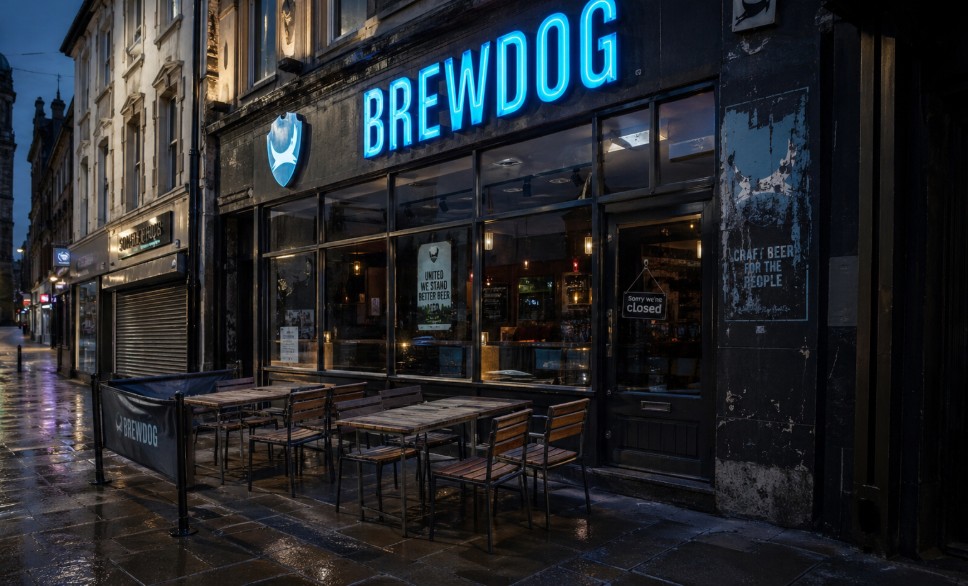

BrewDog has entered administration in 2026, marking a dramatic collapse from its once £1bn valuation to a £33m sale, confirming that the company is no longer operating in its original form.
Once a leading force in the UK craft beer revolution, BrewDog’s decline has been driven by financial losses, rapid expansion, and weakening brand relevance.
While parts of the business continue under new ownership, the original structure has effectively fallen apart.
Key highlights:
- Entered administration in March 2026
- Sold to Tilray for around £33m
- 38 bars closed and 484 jobs lost
- Over 200,000 investors unlikely to see returns
- Estimated £148m losses over five years
This article breaks down what went wrong and what it means for the future.
Is BrewDog Going Bust in 2026?
BrewDog has effectively gone bust in 2026 after entering administration, signalling the collapse of its original business structure following years of financial losses and mounting debt.
Administration is a formal insolvency process used when a company can no longer meet its financial obligations and requires external control to manage creditors and attempt a recovery or sale.
In BrewDog’s case, this resulted in a partial rescue rather than a full recovery. The UK brewing operations, brand, and a limited number of pubs were sold to US-based Tilray for around £33 million.
However, large parts of the business were not saved, leading to widespread closures and redundancies.
An administrator confirmed the scale of the impact:
“Regrettably, a total of 38 bars in the UK will close with immediate effect, leading to 484 redundancies.”
This makes it clear that the situation goes far beyond a simple restructuring. While the BrewDog name may continue under new ownership, the original company, as it was built and operated, has largely ceased to exist.
Who Is BrewDog and Why Was It Once Worth £1bn?
BrewDog was founded in 2007 in Scotland by James Watt and Martin Dickie. What began as a small garage operation quickly transformed into one of the UK’s most recognisable craft beer brands.
The company’s success was driven by bold marketing, a strong anti-establishment identity, and its flagship product, Punk IPA. BrewDog positioned itself as a disruptive force in a traditional beer market.
Key growth milestones:
- Rapid expansion to over 100 bars globally
- International distribution across major markets
- “Equity for Punks” crowdfunding raising over £100m
- Achieving a £1bn valuation by 2017
BrewDog’s branding was central to its growth. Its “punk” identity appealed to younger consumers and built a loyal following. However, the same aggressive style that fuelled growth also attracted criticism and controversy.
The brand’s early success demonstrated how powerful storytelling and community-driven investment can scale a business rapidly. However, it also laid the groundwork for future challenges.
What Happened to BrewDog’s Business Model?
BrewDog’s business model evolved from a focused craft brewery into a complex global hospitality and lifestyle brand. While diversification created new revenue streams, it also increased operational complexity and financial risk.
The company expanded into:
- Bars and pubs across the UK and internationally
- Hotels and experiential venues
- Spirits including gin and vodka
- Large-scale international breweries
This aggressive expansion required constant growth to remain sustainable. However, profits failed to keep pace with spending.
| Aspect | Growth Phase | Decline Phase |
| Bars | 100+ globally | 38 closures in 2026 |
| Valuation | £1bn+ | £33m sale |
| Profitability | Profitable until 2019 | Continuous losses after |
| Investor Sentiment | Strong | Collapse of trust |
Ultimately, BrewDog’s model relied heavily on scaling fast and maintaining brand relevance. When growth slowed and costs increased, the structure became unsustainable. This imbalance marked the beginning of its financial decline.
Why Did BrewDog Go Into Administration?
BrewDog’s administration was not caused by a single issue but a combination of financial, strategic, and reputational challenges.
How Did Financial Losses Damage BrewDog?
The company reported a £37m loss shortly before entering administration and accumulated approximately £148m in losses over five years. These consistent losses eroded cash flow and increased reliance on external funding.
Debt obligations, including loans and investor expectations, added further pressure. Without profitability, BrewDog could not sustain its operational scale.
Did Rapid Expansion Push BrewDog Too Far?
Rapid expansion played a significant role in BrewDog’s downfall. Opening new bars, launching new products, and entering international markets required heavy investment.
However, many locations failed to deliver expected returns. At the same time, external pressures such as rising costs in the UK hospitality sector made it harder to maintain margins.
Key contributing factors:
- Overexpansion into global markets
- High operating costs
- Declining customer demand in some locations
- Increased competition in craft beer
A senior executive commented:
“Independent brewers across the board have felt the squeeze from economic pressures… it’s not just us.”
This highlights that while BrewDog faced internal challenges, wider industry trends also played a role. The section concludes that a mix of internal mismanagement and external pressures led to administration.
What Role Did Equity for Punks Play in BrewDog’s Rise and Fall?
“Equity for Punks” was one of BrewDog’s most innovative ideas. It allowed customers to invest in the company, creating a strong sense of community and loyalty.
Over 200,000 investors contributed more than £100m. However, this model also created expectations of financial returns.
When BrewDog collapsed, these investors were left with little to nothing. Preference shareholders, such as private equity firms, were prioritised in repayments.
Investor Outcomes:
| Investor Type | Investment Outcome |
| Equity Punks | Likely zero return |
| Private Equity (TSG) | Partial recovery expected |
| Institutional Lenders | Priority repayment |
This situation damaged trust and highlighted the risks of crowdfunding at scale. While the initiative helped fuel growth, it ultimately became a point of controversy during the collapse. The impact on investors remains one of the most discussed aspects of the story.
How Did BrewDog’s Brand Reputation Decline?
BrewDog’s brand was once its greatest strength, but over time it became a liability. Allegations of toxic workplace culture and controversial leadership decisions affected public perception.
In 2021, an open letter from former employees criticised the company’s internal culture. This was followed by media investigations and ongoing negative press.
Real-Time Example: Staff Perspective
I spoke with a former BrewDog employee who described their experience during the company’s final months.
They explained:
“We were told about redundancies in a short online call. It felt rushed and impersonal. After everything we gave to the brand, it was a shock.”
This insight reflects the disconnect between BrewDog’s public image and internal reality. Staff dissatisfaction contributed to reputational damage, making it harder to maintain loyalty among both employees and customers.
Over time, the brand lost its “punk” authenticity and began to resemble the corporate structures it once criticised. This shift played a major role in its decline.
Why Were BrewDog Beers Dropped by Nearly 2,000 Pubs?
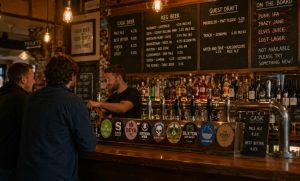
One of the most telling signs of BrewDog’s decline was its removal from nearly 2,000 pubs across the UK. This significantly reduced distribution and visibility.
Real-Time Example: Customer Perspective
A regular customer I spoke to shared their experience:
“I used to always order Punk IPA, but recently I noticed it disappearing from menus. It just didn’t feel like the same brand anymore.”
This reflects a broader trend where consumer preferences shifted towards newer or more consistent craft beer options.
Reasons for declining presence:
- Reduced demand compared to competitors
- Changing consumer tastes
- Pub chains prioritising their own brands
- Perception of the brand becoming outdated
Industry leaders described the brand as losing relevance, which made it easier for pubs to replace it. This loss of market presence significantly impacted revenue and brand visibility.
Which BrewDog Bars Closed After Administration?
Following administration, dozens of BrewDog bars were closed across the UK. Major cities such as London, Manchester, and Edinburgh were affected.
A total of 38 bars shut down immediately, while only a smaller number remained operational under new ownership.
This widespread closure demonstrated the scale of the company’s financial difficulties. It also had a direct impact on employees, many of whom lost their jobs without long notice.
The closures marked a visible end to BrewDog’s high street dominance and signalled a major shift in its business strategy.
Who Bought BrewDog and What Happens Next?
BrewDog’s UK operations were acquired by Tilray, a US-based company, for approximately £33m. The deal included the brewery, brand, and a limited number of pubs.
Tilray aims to integrate BrewDog into its broader portfolio and potentially rebuild the brand.
While some jobs were saved, many assets were excluded from the deal. International operations are still subject to separate negotiations.
The acquisition suggests that while BrewDog failed as an independent company, its brand still holds value. However, its future direction will depend on how effectively the new owners reposition it in the market.
Is BrewDog Still Trading Under Tilray?
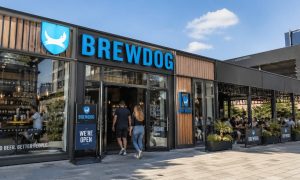
Yes, parts of BrewDog continue to operate under Tilray’s ownership. Selected bars and brewing operations remain active.
However, the scale is significantly reduced compared to its peak. The focus is now on profitability rather than aggressive expansion.
This transition represents a shift from a high-growth startup to a more stable, corporate-managed brand. Whether this strategy succeeds will depend on market conditions and brand repositioning efforts.
What Can UK Entrepreneurs Learn from BrewDog’s Collapse?
BrewDog’s journey offers valuable lessons for entrepreneurs, especially in balancing ambition with sustainability.
While the company achieved rapid growth and strong brand recognition, its challenges highlight the risks of scaling without solid financial foundations and internal stability.
Key takeaways include:
- Rapid growth must be balanced with profitability
- Strong branding must be supported by a healthy internal culture
- Debt and investor expectations can quickly become overwhelming
- Market relevance must be maintained in a competitive industry
The story shows how even successful startups can struggle if core fundamentals are overlooked. It reinforces the importance of sustainable, well-managed growth rather than aggressive expansion at any cost.
Overall, BrewDog’s collapse is not just a failure but a learning opportunity for the wider entrepreneurial community.
Conclusion
So, is BrewDog going bust? The evidence shows that the original company has effectively collapsed after entering administration in 2026.
While parts of the business continue under new ownership, the brand’s identity, structure, and scale have fundamentally changed. What remains is a reduced version of what was once a billion-pound disruptor.
BrewDog’s story is a powerful example of how ambition, innovation, and rapid growth can lead to success, but also to failure if not managed carefully. Its future now depends on whether it can rebuild trust, regain relevance, and adapt to a changing market.
Frequently Asked Questions
Is BrewDog officially in administration?
Yes, BrewDog entered administration in March 2026 after failing to return to profitability and facing mounting financial losses.
Who bought BrewDog in 2026?
US-based company Tilray acquired BrewDog’s UK brewing operations, brand, and a limited number of pubs.
How much was BrewDog sold for?
BrewDog was sold for approximately £33 million, a significant drop from its previous £1bn valuation.
What happened to BrewDog investors?
Most Equity for Punks investors are unlikely to receive any return due to the structure of repayments during administration.
Why did BrewDog close so many bars?
Bar closures were due to financial losses, declining demand, and the need to cut costs during administration.
Is BrewDog still operating today?
Yes, some operations continue under Tilray, but on a much smaller scale than before.
What caused BrewDog’s downfall?
A combination of rapid expansion, financial losses, brand damage, and market pressures led to BrewDog’s collapse.