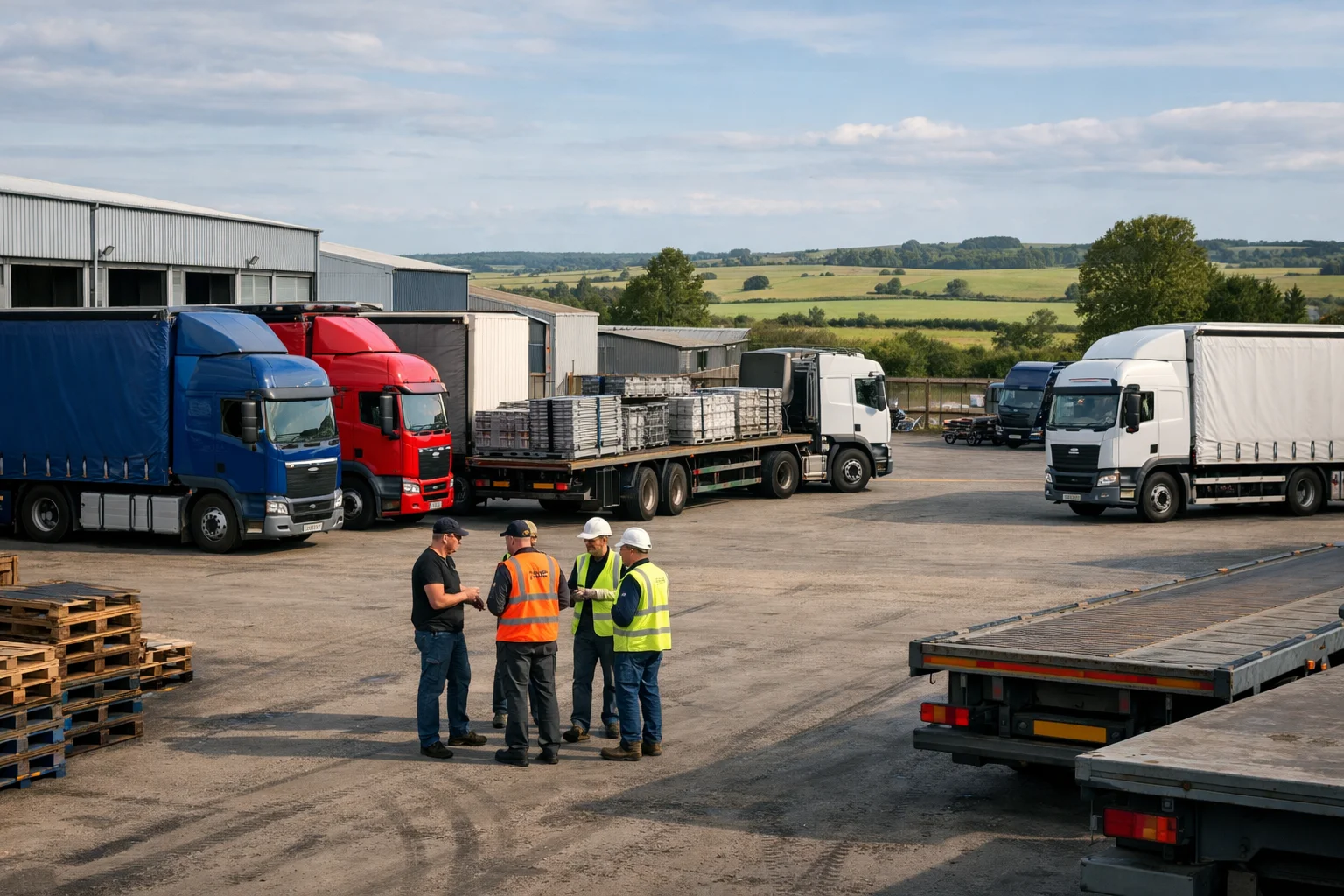

The Mor Cross Transport liquidation marks the end of a long-established Oxfordshire haulage company that operated for over three decades.
Mor Cross Transport Services Limited, based at Enstone Airfield near Chipping Norton, entered creditors’ voluntary liquidation on 29 December 2025 after around 35 years in the UK logistics industry.
The insolvency process placed control of the company with appointed liquidators from Moore Recovery Limited, who will now manage its assets and creditor claims.
Key points surrounding the liquidation include:
- Mor Cross Transport Services Limited entered creditors’ voluntary liquidation in December 2025
- The company had been operating since 1991 and was incorporated in January 1997
- It specialised in freight transport by road across the UK and Europe
- Mustafa Abdulali and Neil James Dingley were appointed as joint liquidators
- The insolvency was formally announced through The London Gazette
The following article explores the background of the company, the circumstances surrounding its insolvency, and what the liquidation means for creditors, customers, and the wider haulage industry.
What happened in the Mor Cross Transport liquidation?

The Mor Cross Transport liquidation was confirmed through an insolvency notice published in The London Gazette, the UK’s official public record for legal notices.
According to the notice, the company entered creditors’ voluntary liquidation (CVL) at the end of December 2025.
This form of liquidation occurs when directors recognise that a company can no longer meet its financial obligations and decide to close the business in an orderly manner. Creditors are then involved in approving the appointment of liquidators who manage the process.
Mor Cross Transport Services Limited had operated in the road haulage sector for decades before financial challenges led to insolvency proceedings.
Once the liquidation began, the directors’ authority ended and responsibility transferred to the appointed insolvency practitioners.
A statement attributed to the liquidators explains the process:
“Following the commencement of creditors’ voluntary liquidation, control of the company’s affairs has passed to the appointed liquidators, who will now realise the company’s assets and address creditor claims in accordance with UK insolvency law.”
Public records confirm the liquidation event but provide limited detail about the financial circumstances that led to the company’s closure. The focus now shifts to assessing assets and managing creditor claims.
Who was Mor Cross Transport Services Limited before liquidation?
Before entering insolvency, Mor Cross Transport Services Limited was a recognised regional haulage business operating from Oxfordshire. The company’s main base was located at Enstone Airfield near Chipping Norton, close to the Cotswolds.
The firm was originally established in 1991, while official records show it was incorporated in January 1997. Over the years, the business developed a reputation for providing dependable road haulage services across the UK and parts of Europe.
For more than three decades, the company supported supply chains by transporting goods for businesses in various sectors. Its operations relied on a fleet capable of handling different types of freight and haulage tasks.
Because of this long history, the Mor Cross Transport liquidation drew attention within the regional logistics sector, marking the closure of a haulage company that had traded for roughly 35 years.
What Services Did the Company Provide in the UK and Europe?
Mor Cross Transport Services Limited focused on freight transport by road, offering logistics services for businesses across the UK and European markets. Its operations supported a range of haulage requirements, from general freight transport to specialised bulk deliveries.
Core Haulage Services
The company provided several key services to commercial clients:
- General haulage for goods transported across the UK
- Bulk haulage for large freight loads
- Traction services enabling other logistics firms to use the company’s vehicles and drivers
- Road freight transport supporting national and European supply chains
These services positioned the firm as a flexible transport provider for various logistics needs.
Fleet and Operational Capabilities
Operational efficiency was supported by a fleet designed for multiple cargo types. The company used specialised vehicles and communication systems to manage transport operations effectively.
- Flatbed vehicles for oversized or irregular cargo
- Curtain-sided vehicles are designed for easier loading and unloading
- 24-hour in-cab communication systems for driver coordination
- Satellite tracking technology for monitoring fleet movements
According to company information, these features helped maintain efficient freight operations and provide customers with reliable delivery tracking.
When and Why Did Mor Cross Transport Enter Creditors’ Voluntary Liquidation?
The Mor Cross Transport liquidation officially began on 29 December 2025, when the company entered creditors’ voluntary liquidation following approval by both members and creditors.
Although official notices confirm the liquidation event, they do not outline the exact financial reasons behind the insolvency. However, companies in the haulage sector often face pressures such as rising operating costs, tight profit margins, and ongoing cash-flow challenges.
Transport businesses must manage significant expenses, including fuel prices, vehicle maintenance, insurance, and regulatory compliance. When these pressures combine with delayed payments or declining demand, financial stability can become difficult to maintain.
An industry professional familiar with insolvency processes commented:
“Creditors’ voluntary liquidation is often chosen when directors recognise that continuing to trade could worsen the company’s financial position. It allows the business to close in a structured and lawful way.”
For Mor Cross Transport Services Limited, the liquidation marks the formal end of its long trading history in the transport sector.
Who Are the Joint Liquidators Handling the Mor Cross Transport Insolvency?
Two insolvency professionals were appointed to manage the company’s liquidation process.
| Role | Details |
| Joint Liquidator | Mustafa Abdulali |
| Joint Liquidator | Neil James Dingley |
| Insolvency Firm | Moore Recovery Limited |
| Appointment Date | December 2025 |
| Responsibility | Managing the company’s liquidation process |
As joint liquidators, Mustafa Abdulali and Neil James Dingley are responsible for taking control of the company’s financial affairs and overseeing the winding-up procedure.
Their responsibilities include:
- Investigating the company’s financial position
- Identifying and securing company assets
- Communicating with creditors and stakeholders
- Distributing available funds according to insolvency rules
One of the liquidators explained the process in a statement:
“Our role is to ensure the liquidation is carried out transparently and in accordance with insolvency legislation while maximising returns for creditors where possible.”
The liquidators act independently and must follow strict legal procedures throughout the process.
How Does a Creditors’ Voluntary Liquidation Work for UK Companies?

When a company becomes financially unsustainable, directors may choose a formal insolvency procedure known as a creditors’ voluntary liquidation (CVL) to close the business responsibly.
Key Stages of the Liquidation Process
A creditors’ voluntary liquidation (CVL) is one of the most common forms of corporate insolvency in the UK. It occurs when directors conclude that the company cannot continue trading due to financial difficulties.
The typical steps include:
- Directors determine that the company is insolvent
- Shareholders pass a resolution to place the company into liquidation
- Creditors approve the appointment of liquidators
- Liquidators assume control of the company’s assets and records
Once this process begins, the company usually ceases trading activities, and the liquidation focuses on winding down operations.
Responsibilities of the Appointed Liquidators
After taking control of the company, the liquidators carry out several important tasks.
They review financial records, identify assets that can be sold, and communicate with creditors about their claims. The goal is to realise any available value and distribute funds according to the statutory order of priority.
A senior insolvency practitioner explained the process:
“During liquidation, the liquidators must carefully review the company’s financial history, realise its assets, and ensure creditors are treated fairly under insolvency law.”
This structured process ensures that the company’s closure is handled in accordance with legal requirements.
What Happens to Creditors, Suppliers, and Customers During Liquidation?
When a company enters liquidation, its relationships with creditors, suppliers, and customers change significantly. In most cases, trading stops and financial matters are handled through a structured insolvency process managed by appointed liquidators.
Key impacts on stakeholders:
- Creditors must submit a formal proof of debt to claim any owed money.
- Liquidators review and verify claims before distributing available funds.
- Suppliers may face disruption if contracts or deliveries are still active.
- Business partners usually need to contact liquidators for updates.
- Customers with pending shipments may need to confirm delivery status.
- Some services or agreements may be cancelled or transferred.
Although liquidation can create uncertainty, the legal insolvency process is designed to handle claims fairly and transparently. This framework helps ensure creditors and stakeholders are treated according to established UK insolvency rules.
How Can You Verify the Mor Cross Transport Liquidation Through Official Records?

Members of the public and business partners can verify the Mor Cross Transport liquidation through several official UK sources.
The London Gazette publishes legal notices relating to insolvency proceedings, including the appointment of liquidators and the start of liquidation processes. These notices provide formal confirmation of corporate insolvency events.
Companies House also records the status of UK companies. Once a company enters liquidation, its status is updated to reflect this change, allowing anyone to verify its insolvency status online.
These official records ensure transparency in the insolvency process and provide reliable information for creditors, suppliers, and the general public.
What Does the Mor Cross Transport Liquidation Reveal About Challenges in the Haulage Industry?
The closure of Mor Cross Transport Services Limited highlights broader challenges facing the UK road haulage industry. Even long-established logistics companies can encounter financial difficulties when operating conditions become increasingly complex.
The transport sector is heavily influenced by fluctuating operating costs and economic conditions. Businesses must balance fuel prices, driver wages, maintenance expenses, and compliance requirements while competing in a highly competitive market.
The case also illustrates how industry pressures can affect businesses regardless of their trading history. Companies with decades of experience may still face financial strain if market conditions shift or operational costs increase significantly.
The following table summarises the key facts relating to the Mor Cross Transport insolvency:
| Key Detail | Information |
| Company Name | Mor Cross Transport Services Limited |
| Company Number | 03306501 |
| Industry | Freight transport by road |
| Base Location | Enstone Airfield, Chipping Norton |
| Established | 1991 |
| Incorporated | January 1997 |
| Liquidation Date | 29 December 2025 |
| Liquidation Type | Creditors’ Voluntary Liquidation |
| Liquidators | Mustafa Abdulali and Neil James Dingley |
| Insolvency Firm | Moore Recovery Limited |
While each insolvency case has its own circumstances, the Mor Cross Transport liquidation serves as a reminder of the financial pressures present within the modern logistics and transport sector.
Conclusion
The Mor Cross Transport liquidation closes the chapter on a haulage company that served the UK logistics sector for more than three decades.
While the exact financial pressures behind the insolvency remain unclear, the case highlights the challenges facing long-standing transport firms in an increasingly competitive industry.
With the liquidators now responsible for managing assets and creditor claims, the focus shifts to resolving the company’s financial obligations. For the wider haulage sector, the closure serves as a reminder of how market pressures, rising costs, and operational challenges can affect even established logistics businesses.
FAQs about Mor Cross Transport Liquidation
What type of business was Mor Cross Transport Services Limited?
Mor Cross Transport Services Limited was a road haulage company providing freight transport across the UK and Europe, including bulk haulage and general freight services.
Where was Mor Cross Transport based?
The company operated from Enstone Airfield near Chipping Norton, Oxfordshire, which served as its main logistics base.
What role does The London Gazette play in company liquidations?
The London Gazette publishes official UK legal notices, including insolvency announcements and liquidation appointments.
What is the difference between liquidation and company dissolution?
Liquidation involves selling assets to pay creditors. Dissolution occurs later when the company is officially removed from the Companies House register.
Can a company continue operating during liquidation?
Usually, a company stops trading, though limited operations may continue if it helps maximise asset value.
How long does a creditors’ voluntary liquidation take?
It typically takes several months to a few years, depending on case complexity.
What should creditors do if they are owed money?
Creditors should contact the liquidator and submit a proof of debt claim.