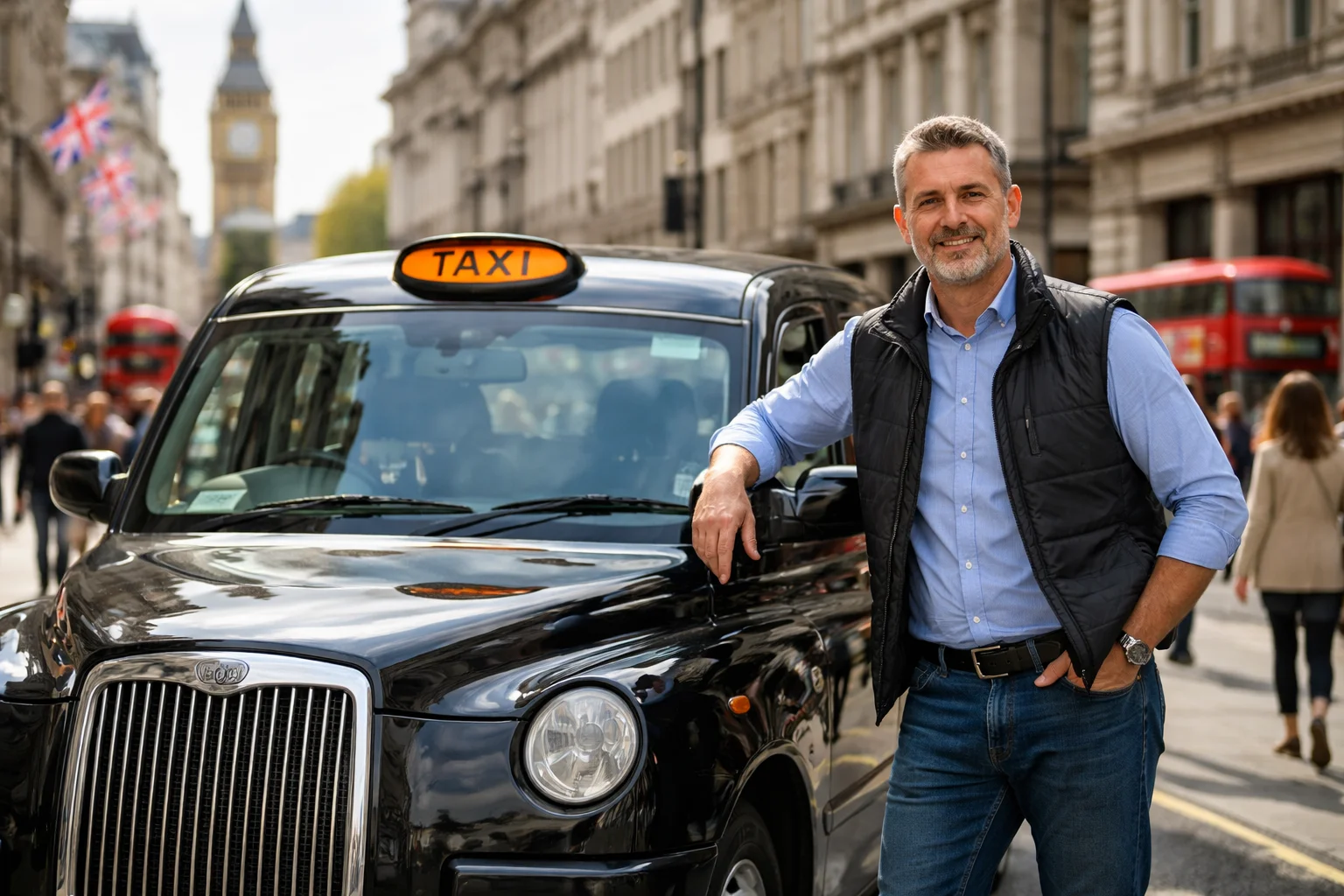

I often get asked how much do black cab drivers earn in London, and the honest answer is: it depends, but not as lucratively as many people assume. Based on current data, driver experiences, and industry analysis, most full-time London black cab drivers now take home £25,000–£30,000 a year, a noticeable drop from pre-pandemic levels.
Earnings have fallen by as much as £15,000 annually for many drivers, largely due to rising operating costs and intense competition from app-based services.
In simple terms, here’s the snapshot:
- Pre-pandemic net earnings were typically £35,000-£45,000
- Current average take-home is closer to £25,000-£30,000
- High earners can approach £80,000+, but only under specific conditions
- Weekly costs, especially vehicle leasing, can exceed £300-£400
This article breaks down exactly where the money comes from, where it goes, and whether driving a black cab in London is still financially worthwhile.
What Is the Average Salary of a London Black Cab Driver?

When people ask how much London black cab drivers earn, they usually expect one clear figure. In reality, there is no fixed salary because drivers are self-employed, and income varies based on hours worked, demand, and operating costs.
| Earnings Type | Estimated Annual Amount |
| Gross earnings range | £23,000 – £43,000 |
| Average gross income | ~£31,000 |
| Typical net income | £25,000 – £30,000 |
| Key expenses | Insurance, licence, fuel/electricity, vehicle finance |
While gross earnings can look reasonable, they don’t reflect take-home pay. Once running costs are deducted, net income is often much lower. Many drivers only reach the higher end by working long or unsociable hours, making earnings less predictable than in the past.
One experienced driver summed it up simply:
“People see the fares and think we’re doing well, but they don’t see what goes out every week before I pay myself.”
What Did Black Cab Drivers Earn Before the Pandemic?
Before 2020, the financial picture looked very different. Demand was steadier, competition from private hire apps was less aggressive, and operating costs were lower across the board.
A full-time London black cab driver could realistically expect to earn £35,000–£45,000 net per year. Some earned more, particularly those who focused on peak times, airport runs, and busy central London routes. Importantly, these figures were achievable without extreme working hours.
Today, many drivers report earning £15,000 less per year than they did before the pandemic. This drop is not due to a single factor but a combination of reduced passenger numbers, rising costs, and structural changes within the industry.
The contrast highlights how dramatically the economics of black cab driving have shifted in just a few years.
Can a Black Cab Driver in London Earn Over £80,000?

Yes, but it is the exception rather than the rule. High earnings are possible, but only under specific conditions and often with trade-offs.
Some drivers, particularly owner-drivers who have paid off their vehicle and work strategically, can push their annual income towards the £80,000–£85,000 mark.
This figure is significant because once a driver crosses the VAT threshold of £85,000, their tax obligations increase sharply. Unlike tradespeople, cab drivers cannot add VAT to regulated fares, making it inefficient to earn beyond this point.
How High Earners Do It?
For drivers who reach the upper end of the scale, income is usually boosted by:
- Long working weeks, often 55–65 hours
- Heavy focus on Tariff 2 and Tariff 3 hours
- Offering private or guided tours alongside regular fares
As one driver-content creator explained:
“It gives you a good idea of what a London cab driver could earn, but it’s not what most people actually take home.”
High earnings come at the cost of time, energy, and often personal life, which is why many drivers deliberately aim to earn just below the VAT threshold instead.
What Are the Main Costs Black Cab Drivers Face?
Earnings alone don’t tell the full story. To understand how much do black cab drivers earn in London, you must look at what they spend just to stay on the road.
Typical Weekly Running Costs for London Black Cab Drivers:
| Expense Category | Approximate Weekly Cost |
| Vehicle lease (electric) | £360–£400 |
| Insurance | Included or £50–£70 |
| Fuel / electricity | £50–£120 |
| Maintenance & repairs | £30–£100 |
| Licensing & admin fees | £15–£30 |
For drivers leasing an electric taxi, the weekly “nut” can exceed £500 before they earn a single pound. This is why many drivers now judge success not by daily takings, but by how quickly they cover fixed costs.
Vehicle ownership dramatically alters the equation, but owning a cab outright requires significant upfront investment and long-term planning.
How Do Taxi Tariffs Impact Cabbie Income?
Taxi fares in London are strictly regulated by Transport for London (TfL). While this protects passengers from surge pricing, it also limits earning flexibility for drivers.
TfL Taxi Tariffs and Average Hourly Rates
| Tariff | Time Period | Avg. Hourly Rate |
| Tariff 1 | Weekday daytime | £41.62 |
| Tariff 2 | Evenings & weekends | £50.35 |
| Tariff 3 | Late nights & public holidays | £53.33 |
On paper, these figures look strong. In reality, they represent potential, not guaranteed earnings. Traffic congestion, downtime between fares, and quiet periods all reduce the effective hourly rate.
Drivers who concentrate on Tariff 2 and 3 hours generally earn more per hour, but this often means working nights, weekends, and holidays, when most people are off work.
How Many Hours Do London Cab Drivers Work Per Week?
Most full-time black cab drivers work between 40 and 60 hours per week, with many settling into an 8–10 hour day. Split shifts are common, allowing drivers to avoid quiet periods and return for the evening rush.
Longer hours do increase earnings, but only up to a point. Fatigue, congestion, and diminishing returns can make excessively long shifts counterproductive. Many drivers describe the job as mentally demanding rather than physically exhausting, especially in heavy traffic.
As one veteran cabbie put it:
“You’re always switched on. It’s not just driving—it’s thinking, planning, and adapting all day.”
A balanced schedule that prioritises peak demand hours, while allowing for proper rest, is often the most sustainable way for London cab drivers to maximise earnings without burning out.
What Is ‘The Knowledge’ and Why Does It Matter?
Before a black cab ever picks up its first passenger, the driver must master The Knowledge, a rigorous test of memory, navigation, and local expertise that sets London cabbies apart from every other type of driver.
The Training Process
Becoming a black cab driver requires passing The Knowledge, one of the most demanding vocational training programmes in the world. It typically takes three to four years and covers more than 25,000 streets within a six-mile radius of Charing Cross.
Drivers are not tested with written exams but through a series of verbal “appearances”, where they must recite routes, landmarks, and alternatives under pressure.
Why It Still Matters Financially?
While The Knowledge does not guarantee high earnings, it gives black cab drivers a unique advantage. Their ability to navigate efficiently, anticipate congestion, and adapt routes can significantly improve productivity and passenger trust.
A long-serving driver once joked:
“The question I wish people would stop asking is, ‘Do you use sat nav?’ I spent four years learning London—of course I don’t.”
That expertise can translate into better tips, repeat customers, and higher efficiency, even in today’s challenging market.
How Has Uber Changed the Black Cab Industry in London?
There is no discussion of how much black cab drivers earn in London without acknowledging the impact of Uber and similar ride-hailing platforms. Many drivers argue that the industry was reshaped less by innovation and more by regulatory imbalance.
While black cab drivers must meet strict requirements, passing The Knowledge, using approved vehicles, and complying with rigorous licensing rules, private hire drivers operate under far lighter regulations. This uneven playing field has intensified competition and placed downward pressure on fares.
As a result, traditional taxis have seen reduced demand, particularly for short urban journeys. Passenger expectations have also shifted, with convenience, app-based pricing, and perceived affordability often outweighing experience and local expertise.
What Do Black Cab Drivers Say About Their Job and Pay?
Beyond the numbers, black cab driving is shaped by deeply human experiences. Many drivers say the job gives them moments they would never find in a typical office role, small interactions that leave a lasting impression.
Drivers often mention:
- Overhearing life-changing conversations
- Meeting famous or unexpected passengers
- Helping vulnerable people get home safely
One cabbie recalled giving a free ride to a WWII veteran travelling to the Cenotaph, calling it the most meaningful journey of his career. Stories like this highlight the emotional side of the job.
However, the work also brings real frustrations. Fare dodgers, aggressive passengers, long quiet periods, and hours spent alone in traffic can take their toll. Despite falling earnings, many drivers remain because black cab driving still offers something rare, true independence combined with genuine human connection.
Is Driving a Black Cab Still a Good Career Choice?

Black cab driving isn’t the guaranteed earner it once was, but it remains a compelling career for the right person. With rising operational costs, fluctuating demand, and increased competition, it no longer promises high wages for minimal effort. However, for those who value independence, control, and craftsmanship, it can still offer a fulfilling professional life.
The ability to set your own schedule is a major perk. Whether you want to work full-time, part-time, evenings only, or seasonally, it’s entirely up to you. Plus, the sense of achievement in passing The Knowledge and becoming a licensed London cabbie offers a unique professional credibility.
That said, it’s not an easy entry. The training is long, the upfront costs are high, and the return on investment takes time. But for those who succeed, the job offers a lifestyle that few modern roles can match.
“You’re your own boss, you meet every type of person, and no two days are the same,” one driver said. “That’s worth a lot in today’s world.”
Ultimately, whether it’s the right career depends on your goals, personality, and willingness to adapt.
How Can Cabbies Maximise Their Income in 2026?
In 2026, cabbies need to think like entrepreneurs. Maximising income isn’t about longer hours alone, it’s about smarter choices, better timing, and tighter cost control. Drivers who actively manage their operations consistently outperform those who rely on traditional working patterns.
High-impact ways to earn more include:
- Working during Tariff 2 and 3 periods (evenings, weekends, holidays)
- Focusing on peak demand months such as June and December
- Offering private or themed tours, which can earn £250+ per session
| Strategy | Income Impact |
| Tariff 2 & 3 hours | Higher hourly rates |
| Peak season driving | Increased passenger demand |
| Private tours | £250 per tour |
| Cost reduction | Higher take-home pay |
| Owning the cab | Improved net profit |
Ultimately, cabbies who track performance, control costs, and adapt to demand are far more likely to thrive in a challenging market.
Final Thoughts
So, how much do black cab drivers earn in London today? For most, it’s a modest living rather than a lucrative one. The profession has changed, and the financial rewards no longer match the romantic image many people hold.
Yet black cab drivers remain a vital part of London’s identity. With the right regulatory support, better EV infrastructure, and fairer competition, the role could become more sustainable again.
Until then, driving a black cab is less about chasing high earnings and more about resilience, skill, and pride in a uniquely London craft.
Frequently Asked Questions
Do London black cab drivers receive tips regularly?
Yes, tips are fairly common and can slightly boost daily income, especially on longer fares.
Is there a dress code for black cab drivers in London?
While there’s no strict uniform, drivers are expected to dress smartly and presentably.
How do black cab drivers accept payment?
Most accept contactless, card, and cash payments, with card payment machines now being mandatory.
Can black cab drivers choose their working areas?
Yes, drivers can freely choose where to operate within licensed zones, often targeting busy hubs.
Are there annual renewal fees for black cab licenses?
Yes, drivers must renew their licence periodically and pay associated TfL fees and checks.
What happens if a black cab breaks down mid-journey?
Drivers are responsible for arranging alternative transport or a refund if a breakdown occurs.
Is it possible to become a black cab driver later in life?
Absolutely, many drivers start in their 40s or 50s after career changes or retirement.