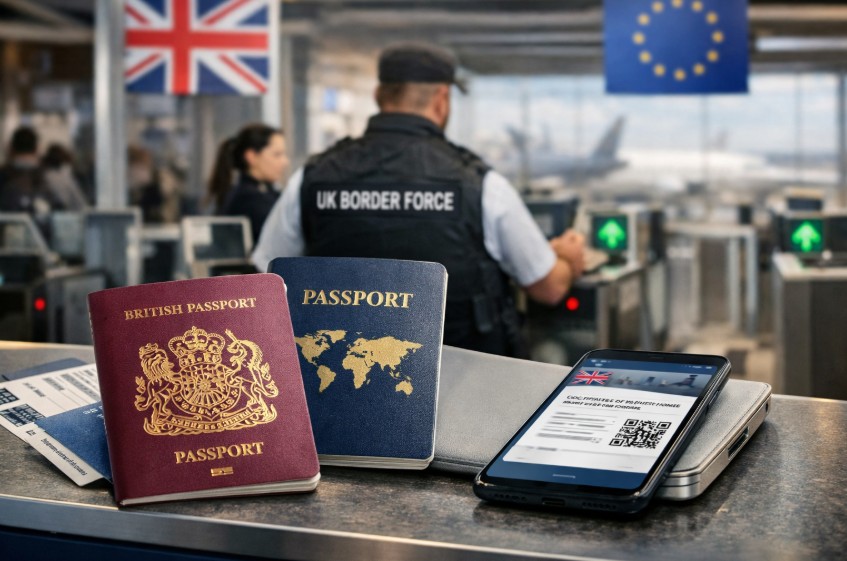

Yes, the UK allows dual citizenship, meaning British citizens can legally hold more than one nationality without renouncing their British status.
As of 2026, holding two passports, British and another, is perfectly lawful in the UK. But legal entitlement and practical travel are no longer the same thing. Recent updates to the UK’s immigration system mean that dual citizens must now prove their citizenship status in specific ways to avoid being denied entry or facing issues at the border.
If you’re a dual national or planning to apply for British citizenship, it’s important to understand how the latest changes affect you. From digital certificates of entitlement to the enforcement of pre-travel permission checks, there’s a lot to navigate.
Here’s what you’ll learn in this article:
- Who qualifies for UK dual citizenship
- What’s changed in 2026, especially at the UK border
- Accepted travel documents for dual nationals
- Benefits and drawbacks of holding two passports
- What employers and travellers need to know
Let’s explore what dual citizenship means today and how the 2026 rules are reshaping international travel for British nationals.
What Is Dual Citizenship and Does the UK Allow It?
Dual citizenship, or dual nationality, refers to an individual legally holding two nationalities at the same time. In the UK, dual citizenship is fully legal. This means a person can be a British citizen while also retaining their original nationality, or acquire a new one, without needing to renounce their British status.
There’s no formal application needed to become a “dual citizen” in the UK. Instead, the concept is recognised automatically. If you meet the criteria for another country’s citizenship and the UK accepts dual nationality, you’re free to hold both passports.
“British law has never required individuals to renounce their previous citizenships to become British. Dual nationality is a legal norm, not an exception.” – Home Office Official, 2026
However, it’s essential to remember that other countries may not accept dual citizenship, and their rules will still apply to you even if the UK is flexible. Always verify this with the relevant embassy or consulate.
Who Is Eligible for Dual Citizenship in the UK?
To hold dual citizenship involving the UK, one must first be a British citizen, usually through naturalisation, birth, descent, or other recognised routes. While British nationals don’t need to give up their UK citizenship when acquiring another, those seeking to become British must meet specific criteria.
Naturalisation Criteria for Adults
- Residency: 5 continuous years in the UK, or 3 years if married to a British citizen
- Settled Status: Must hold Indefinite Leave to Remain (ILR) or pre-settled status
- Life in the UK Test: A 24-question multiple-choice test on British culture and history
- English Language Requirement: Must meet CEFR B1 level or higher
- Good Character: No serious criminal record or immigration offences
Real-Life Example:
Marina, an Italian national, moved to the UK in 2016, secured settled status through the EU Settlement Scheme in 2021, and passed the Life in the UK test in 2023. She applied for British citizenship and retained her Italian passport, now enjoying the rights of both nationalities.
Children and Dual Citizenship
Children born to one British parent may automatically be eligible for UK nationality, depending on their country of birth. However, automatic acquisition doesn’t always apply; applications may still be needed.
What Are the New UK Travel Rules for Dual Citizens in 2026?

While the legal right to dual citizenship hasn’t changed, how British citizenship is proven at the UK border has.
From 25 February 2026, UK Border Force and airline carriers will begin full enforcement of new pre-departure documentation checks. These changes apply especially to dual nationals who may attempt to enter the UK using a non-British passport.
No More Reliance on Foreign Passports
Previously, dual citizens from visa-exempt countries (like the USA, Canada, or Australia) could travel to the UK using their foreign passport without issue. Now, that’s changed.
If you’re a British dual citizen, you must travel with:
- A valid UK or Irish passport, or
- A valid foreign passport that includes a Certificate of Entitlement to the Right of Abode
Foreign passports alone will no longer be sufficient, even if you are British.
Digital Certificates of Entitlement
From 26 February 2026, paper certificates of entitlement will be replaced with digital certificates. These are stored in your UK Visas and Immigration (UKVI) account and linked to your foreign passport electronically.
“The transition to digital proof is part of the Home Office’s modernisation strategy. By 2026, no traveller should rely on paper certificates alone.” – UKVI Official Statement
If your paper certificate is still valid by that date, you’ll be issued a digital version automatically.
Can You Travel to the UK on a Foreign Passport If You Are a Dual Citizen?

British dual citizens are still legally entitled to live and work in the UK, but travelling on a foreign passport alone is no longer advisable after February 2026. New border and airline checks now require digital confirmation of your immigration or citizenship status before boarding a flight to the UK.
Without a UK passport or approved digital status, dual nationals risk being denied boarding, facing lengthy airport delays, or being unable to prove their right of abode on arrival. These checks are part of the UK’s “permission to travel” scheme, which places legal responsibility on airlines and carriers to verify passenger eligibility before departure.
How Can Dual Citizens Prove Their Right of Abode in the UK?
Proving your right of abode as a British dual citizen in 2026 requires specific, verifiable documents that align with the UK’s tightened border protocols.
The only recognised forms of proof are:
- A valid British passport
- A Certificate of Entitlement (linked digitally to your foreign passport)
Other documents, such as an expired UK passport, naturalisation certificate, or birth certificate, will not be accepted at the airport.
Valid vs. Invalid Travel Documents
| Document Type | Accepted for UK Entry | Notes |
| Valid British Passport | Yes | Most secure and preferred option |
| Irish Passport (for dual nationals) | Yes | Also exempt from ETA |
| Certificate of Entitlement (Digital) | Yes | From 26 Feb 2026 onwards |
| Expired British Passport | No | Not valid proof of right of abode |
| Naturalisation/Registration Cert. | No | Not accepted for travel verification |
| Foreign Passport (without CoE) | No | Will not meet border requirements alone |
To avoid travel disruption or denied boarding, dual nationals must ensure their British citizenship is documented through a valid British passport or a digitally linked Certificate of Entitlement, nothing less will suffice.
What Are the Benefits and Drawbacks of UK Dual Citizenship?
Benefits of Dual Citizenship
Dual citizenship offers significant advantages, both personal and economic.
As a British dual national, you gain:
- Full rights of residence, work, and study in the UK.
- Access to healthcare through the NHS and other public services.
- Voting rights and eligibility for public office.
- Visa-free or simplified access to over 180 countries via a British passport.
- The ability to pass on British citizenship to children born abroad (depending on eligibility).
Moreover, holding another citizenship may provide access to other benefits such as foreign healthcare, pension rights, property ownership, or tax relief – depending on the country.
Disadvantages to Consider
While the perks are significant, there are also some downsides:
- Dual tax obligations, depending on your other country (e.g. the US taxes global income)
- Military service conflicts, especially in countries with conscription
- Diplomatic limitations: The UK cannot assist you in the other country where you’re also a citizen
“The government respects your right to hold multiple nationalities, but expects you to meet the obligations of each equally.” – Foreign, Commonwealth & Development Office
Which Countries Allow or Restrict Dual Nationality?

Not every country permits dual or multiple citizenship, which can significantly impact your long-term plans.
Before applying for British citizenship, it’s essential to confirm whether your home country allows dual nationality. Some countries automatically revoke your original citizenship upon acquiring another, while others may require formal permission or notification.
Countries that Allow Dual Citizenship
Countries like Australia, Canada, France, Ireland, Israel, Italy, Sweden, Switzerland, the USA, and most of the EU do allow dual citizenship with few or no restrictions.
Countries with Limitations
Countries like Germany or South Africa allow dual nationality under specific conditions, such as gaining prior consent.
Countries that Prohibit Dual Citizenship
Others, including India, China, Indonesia, and Japan, do not permit dual nationality. If you acquire British citizenship, you may be required to surrender your original one. Some nations, like India, offer alternative statuses like OCI (Overseas Citizen of India), which offer limited rights without full citizenship.
| Country | Dual Citizenship Policy |
| United Kingdom | Permitted |
| United States | Permitted |
| Germany | Limited (conditions apply) |
| India | Not permitted; OCI status only |
| Japan | Not permitted |
| Australia | Permitted |
This table isn’t exhaustive, so always check with your country’s consulate or immigration department before applying.
How to Apply for Dual Citizenship in the UK?
The UK does not have a separate “dual citizenship application.” Instead, you apply to become a British citizen through naturalisation, and if your other country allows dual citizenship, you simply retain your original nationality.
Step-by-Step Application Process
- Check Eligibility: Meet residency, language, and “good character” requirements
- Collect Documents: Passport, ILR evidence, test results
- Apply Online: Fill out the form on the UK government website
- Pay Fees: £1,330 (standard naturalisation fee)
- Biometric Appointment: Provide fingerprints and photo
- Attend the ceremony: Swear allegiance and receive your citizenship certificate
Application Timeline and Cost
| Step | Timeframe | Cost |
| Application Review | 3–6 months | £1,330 |
| Biometric Appointment | Within 2 weeks | Included |
| Citizenship Ceremony | Within 3 months | £80 (approx.) |
Once you have your certificate, you can apply for a British passport, which becomes your formal travel document.
What Should Employers Know About UK Dual National Employees in 2026?

For UK-based employers, dual citizenship is not only a legal matter but an operational one. As border checks become stricter, even British citizens are at risk of travel disruption if their documentation isn’t aligned with new requirements.
Employees who frequently travel on non-UK passports may now be:
- Denied boarding by airlines
- Delayed during international business trips
- Exposed to compliance risks for their organisations
Recommendations for Employers
- Audit the nationality and passport usage of internationally mobile staff
- Clarify travel policy expectations for UK-based employees
- Encourage passport renewals well in advance
- Include citizenship documentation in risk planning
With ETA systems, digital right-to-work checks, and biometric security increasing, paper-based or informal approaches are no longer reliable.
Conclusion
To summarise: Yes, you can hold two passports as a British citizen, and there’s no legal cap on how many nationalities a UK citizen may have. However, from 2026 onward, the emphasis is on proving British citizenship, especially when travelling.
To avoid delays or denied entry, always travel with:
- A valid UK or Irish passport, or
- A Certificate of Entitlement to the Right of Abode digitally linked to your passport
Be proactive, stay informed, and ensure that your documentation meets the latest compliance standards. Your citizenship is not in question, but your proof of it may be.
FAQs About UK Dual Citizenship Rules
Can I have three or more passports, including a British one?
Yes. The UK does not restrict the number of nationalities a citizen may hold. However, your other countries of citizenship must also allow this.
Do I need to tell the UK government if I get another citizenship?
No, you do not need to inform the UK Home Office unless your other nationality affects your eligibility for public roles or security clearance.
What if my other country doesn’t allow dual citizenship?
You may be required to renounce one nationality. Check with your consulate for legal obligations before applying for UK citizenship.
Can my child automatically get UK citizenship if I’m British?
It depends. If the child is born abroad, additional requirements may apply. You may need to register their citizenship with the Home Office.
Can I work in the UK with dual citizenship?
Yes. Dual nationals are treated the same as all British citizens in terms of work rights and access to services.
Is dual citizenship the same as permanent residency?
No. Permanent residency gives you the right to live in the UK, but not the full rights of a citizen (e.g., voting, UK passport).
What happens if I lose one of my nationalities?
Losing your second nationality doesn’t affect your British citizenship unless you renounce it voluntarily through a legal process.